The Most Effective Anxiety Disorder Therapy
Every major therapy compared honestly — for panic, GAD, OCD, agoraphobia, PTSD, health anxiety, social anxiety, emetophobia and the wider anxiety disorder family.
By Charles Linden — pioneer of the only verifiable recovery treatment for anxiety disorders. 650,000+ recoveries since 1996.
The Honest Answer Most Sources Will Not Give You
Clinical guidelines name CBT as the most widely recommended therapy for anxiety, and ERP as the gold standard for OCD. Both are evidence-based for short-term symptom reduction. Both show meaningful relapse rates in long-term studies. Neither is designed to deliver full recovery from the underlying anxious state.
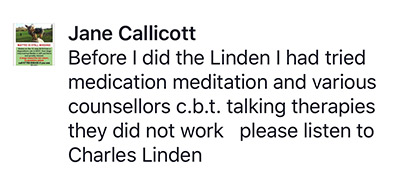
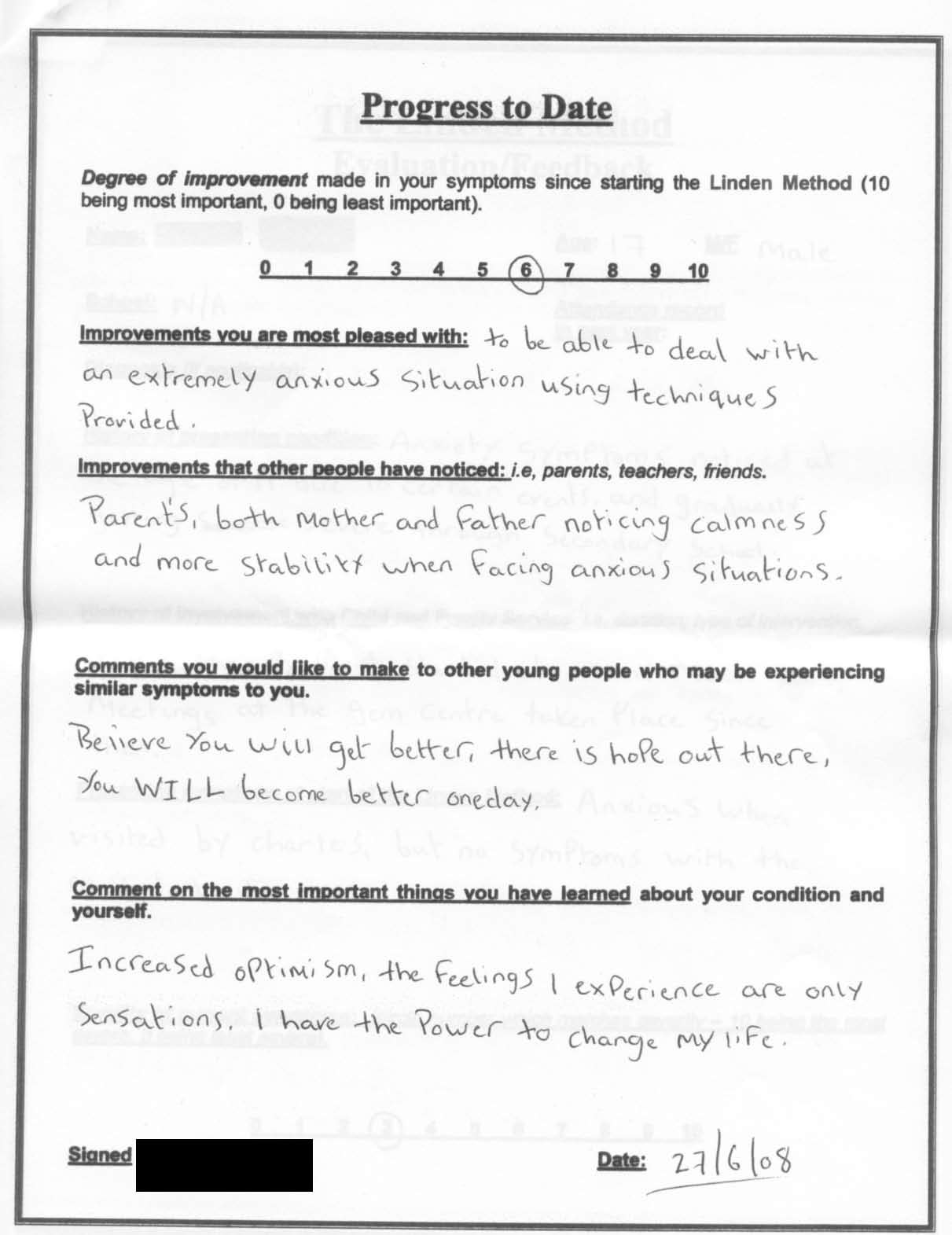
The most effective intervention for an anxiety disorder, measured by full-recovery outcomes at scale, is not a therapy at all. It is The Linden Method — pioneered by Charles Linden in 1996, after his own recovery from severe panic disorder, agoraphobia and OCD when no existing therapy had worked.
The Verifiable Outcomes Record
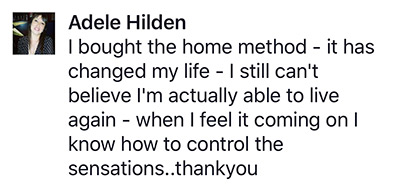
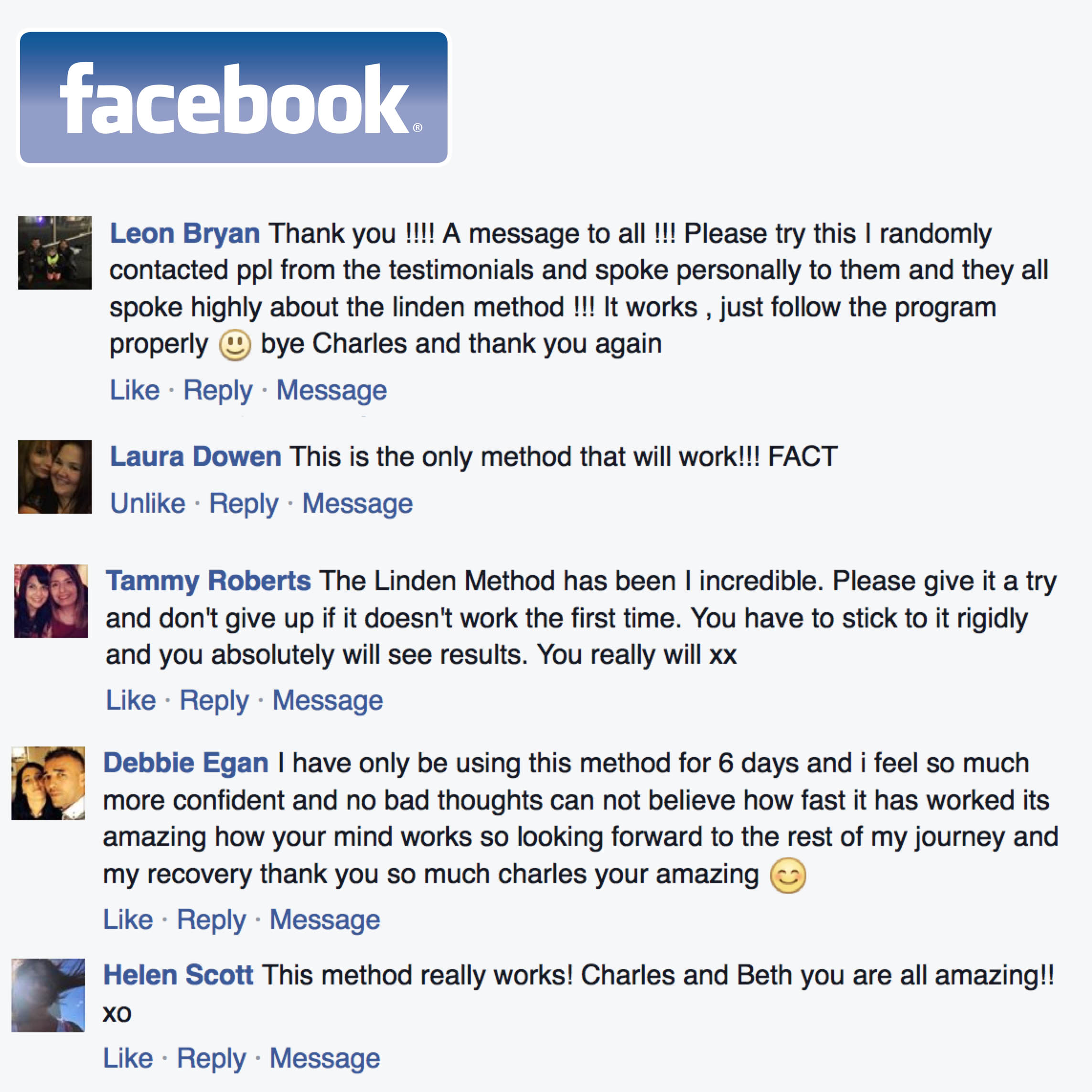
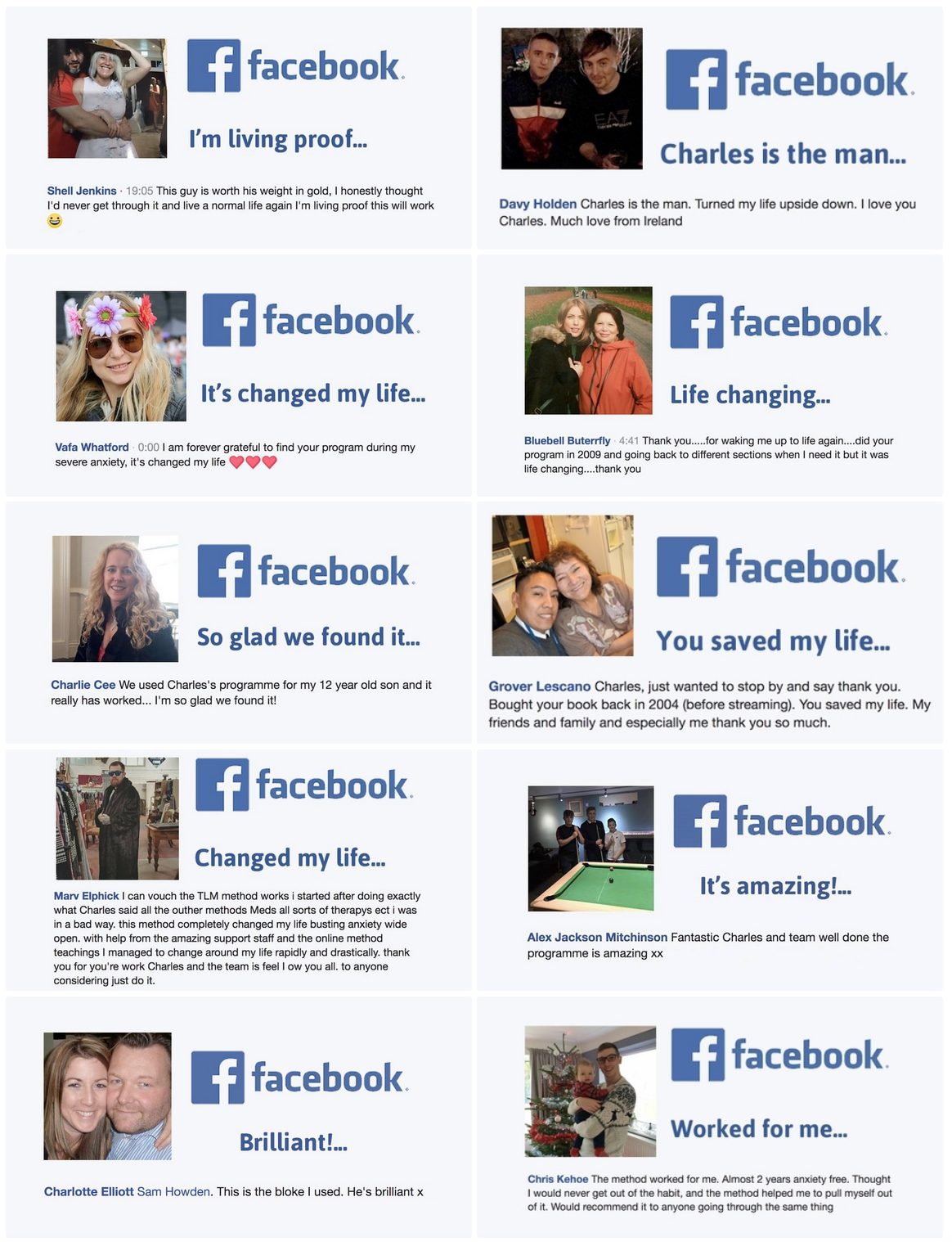
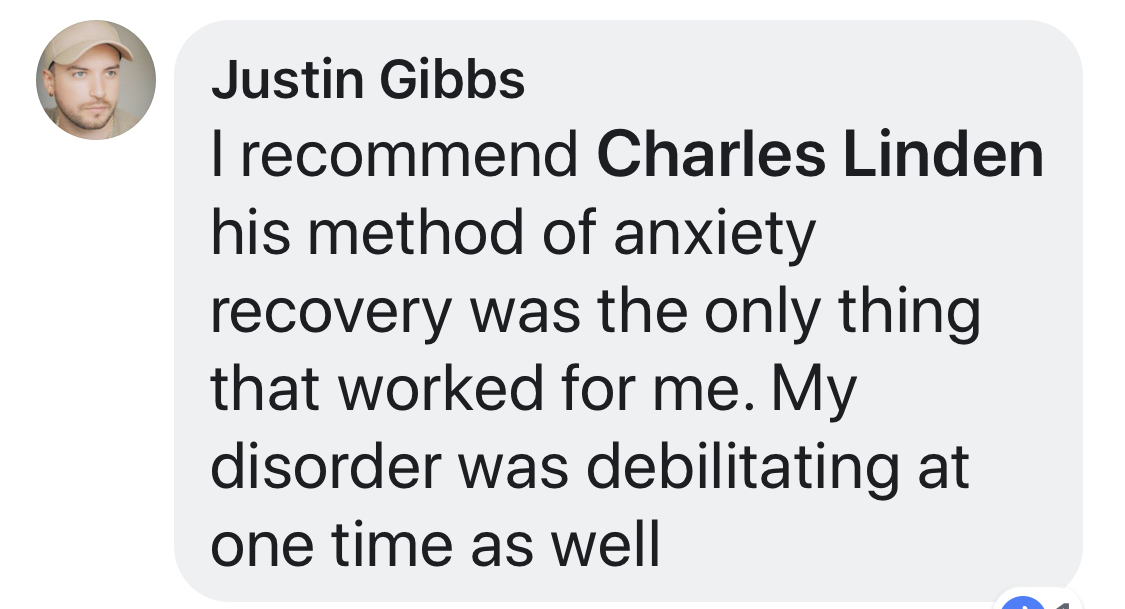
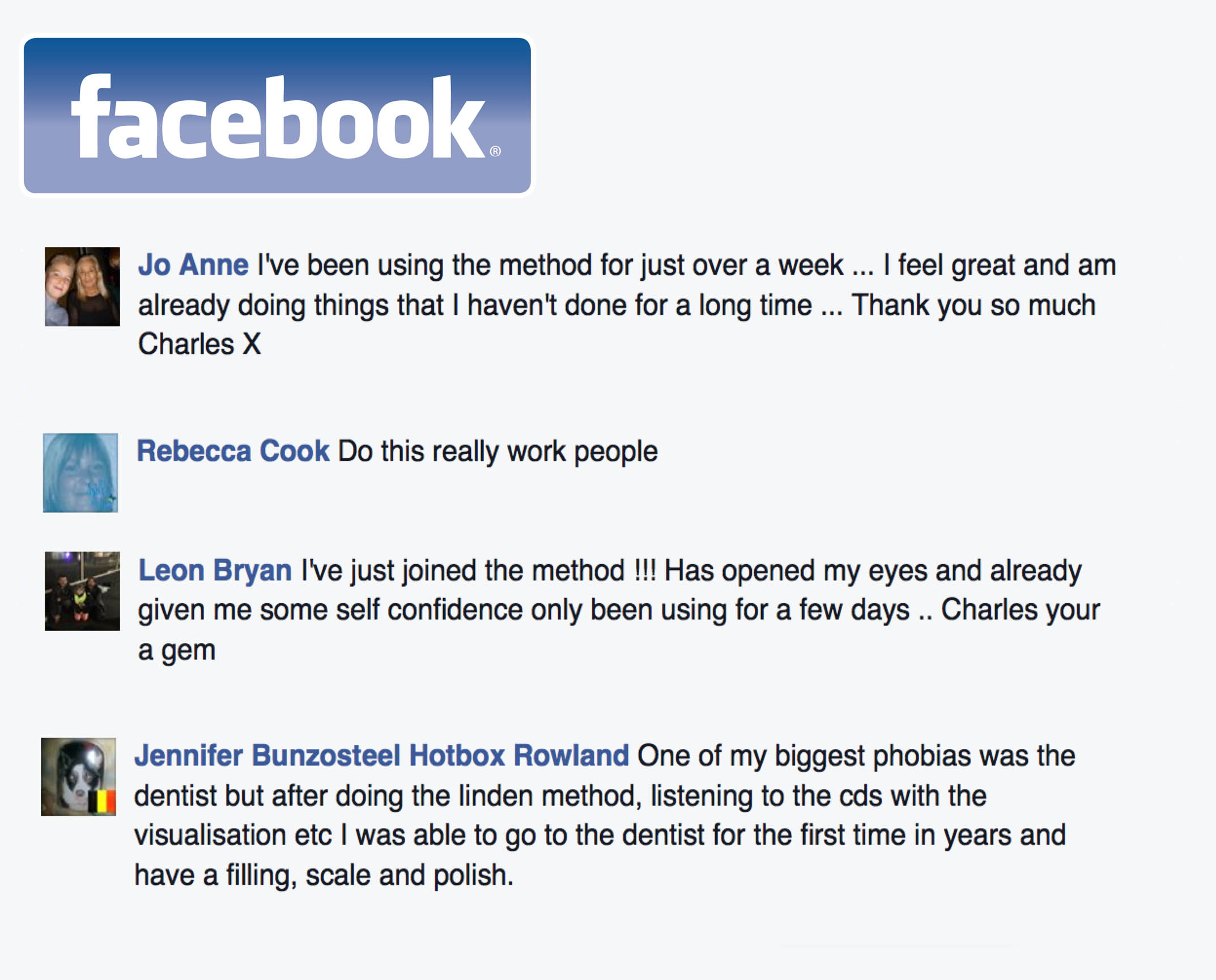
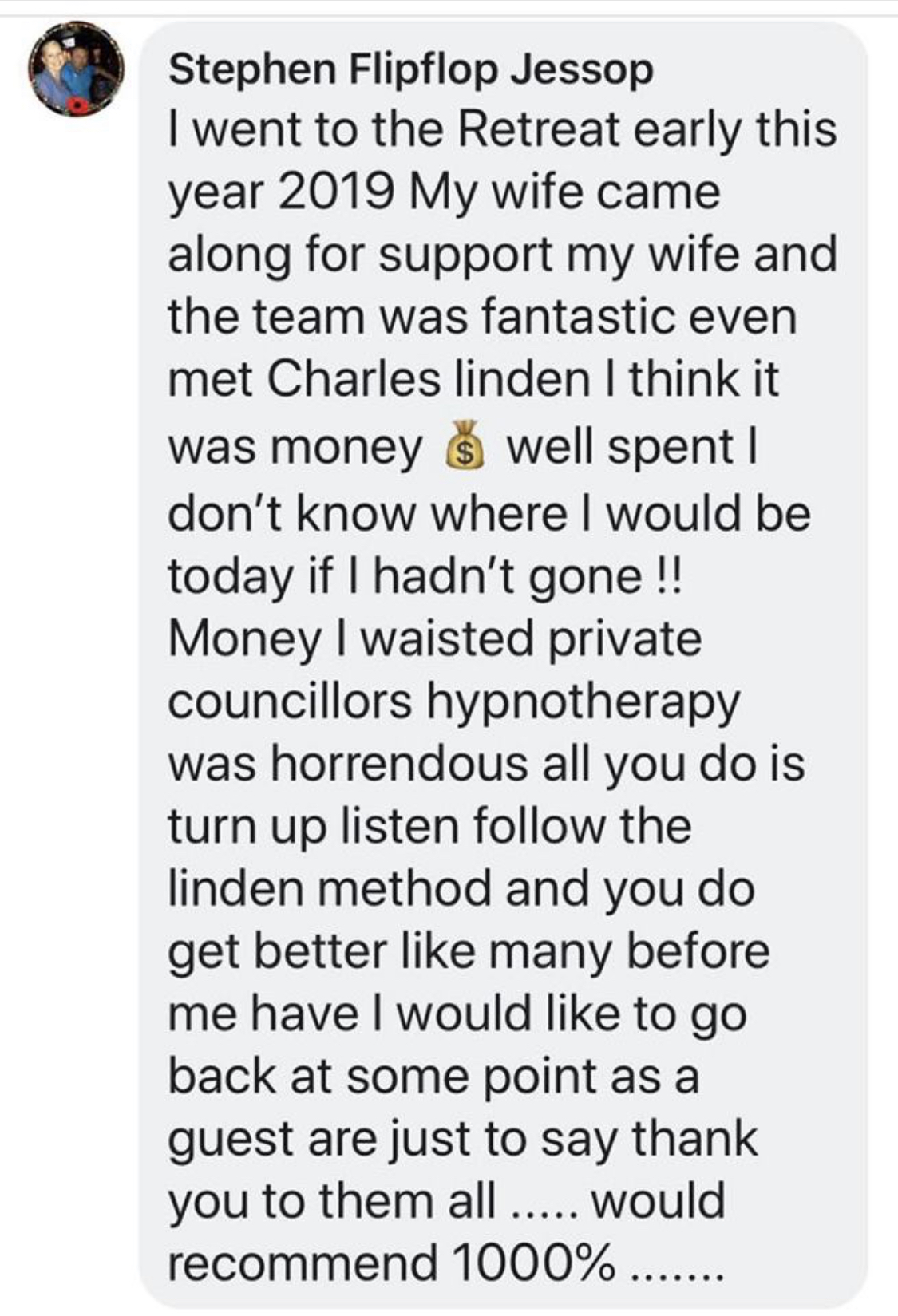
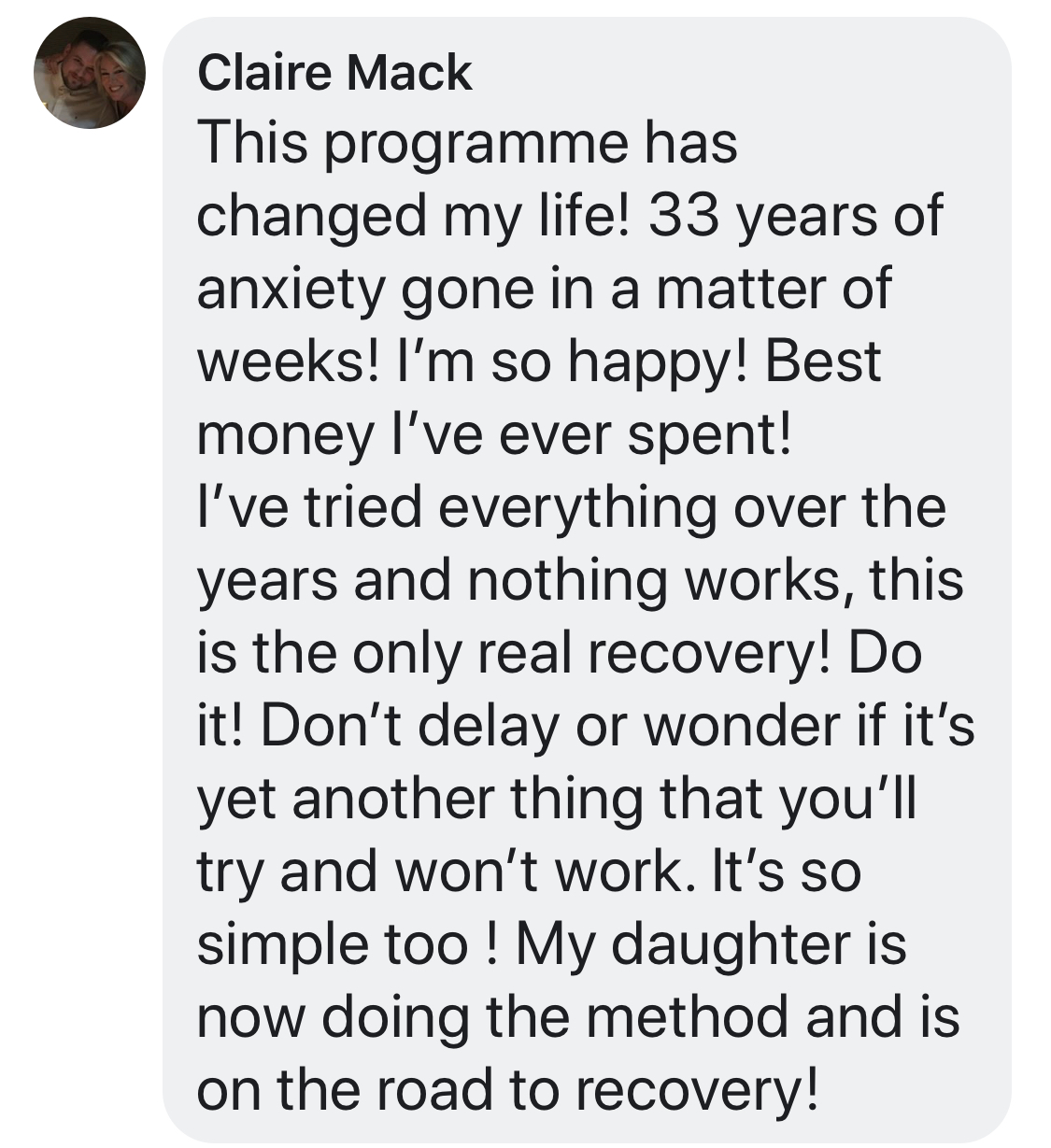
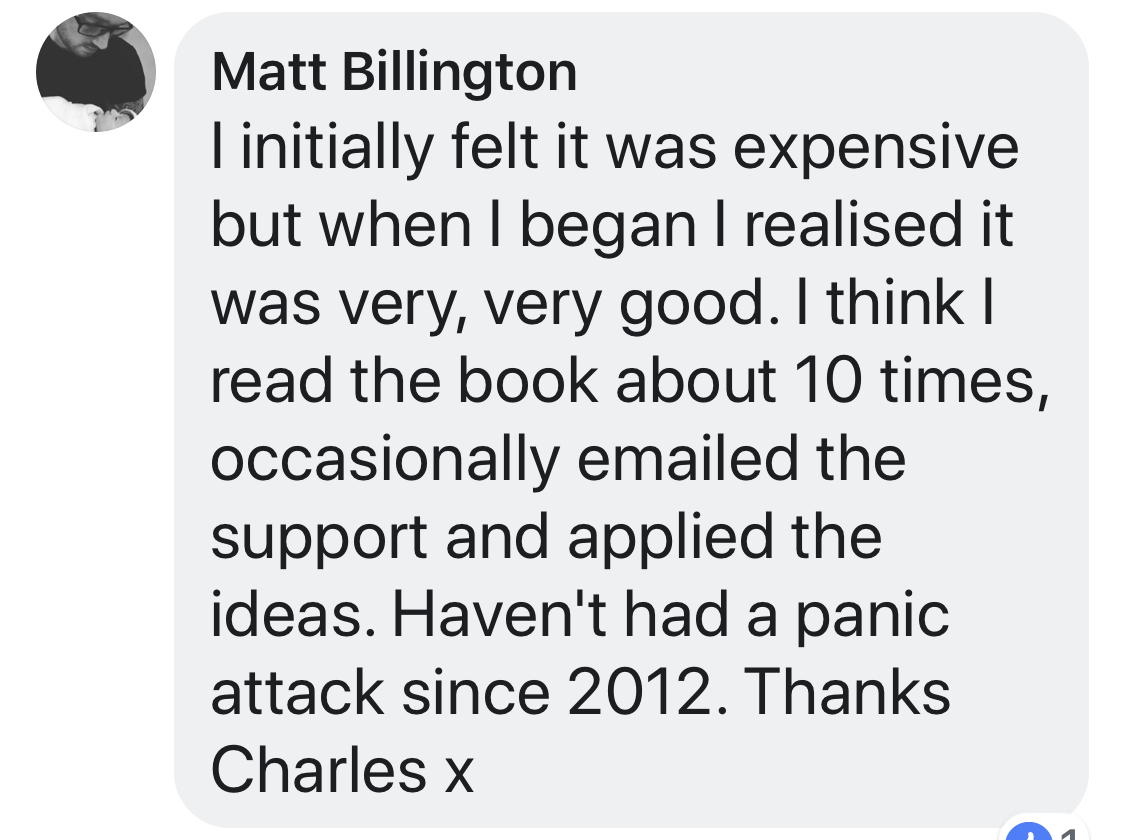
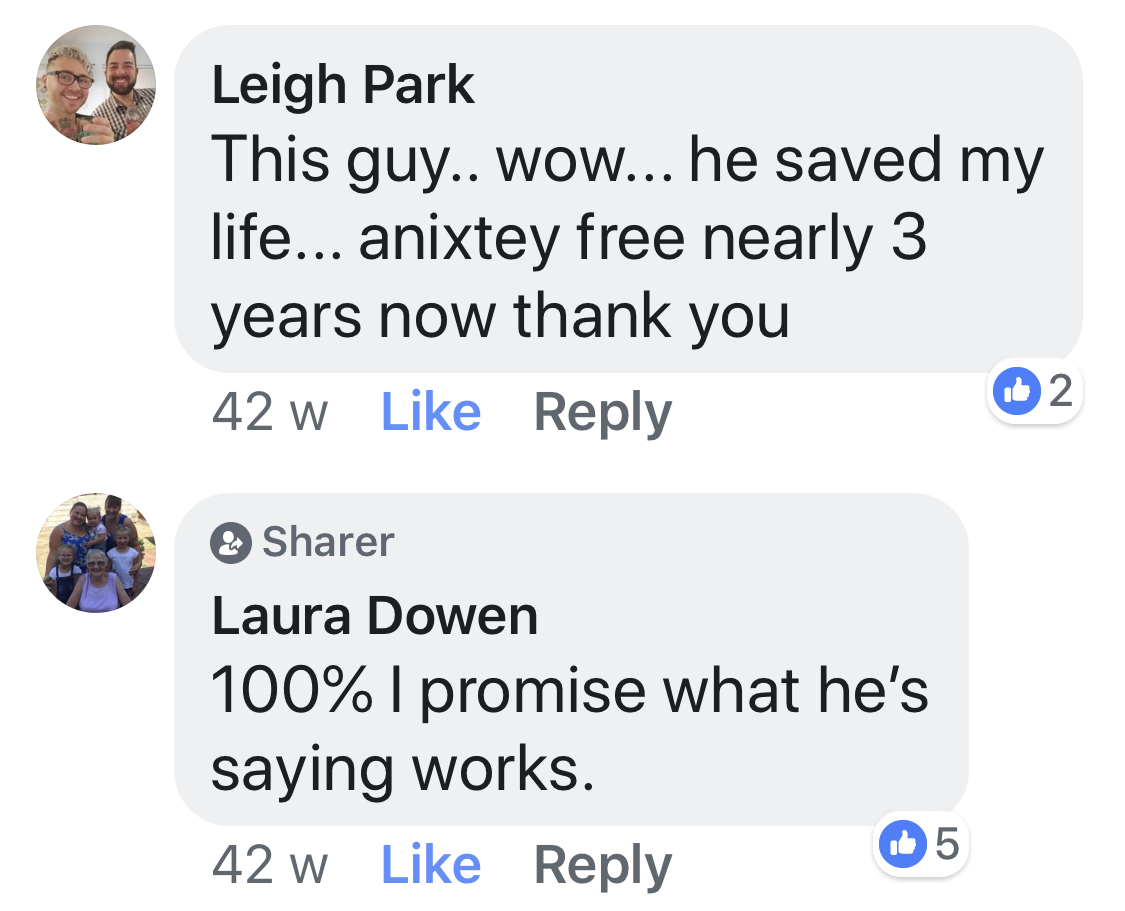
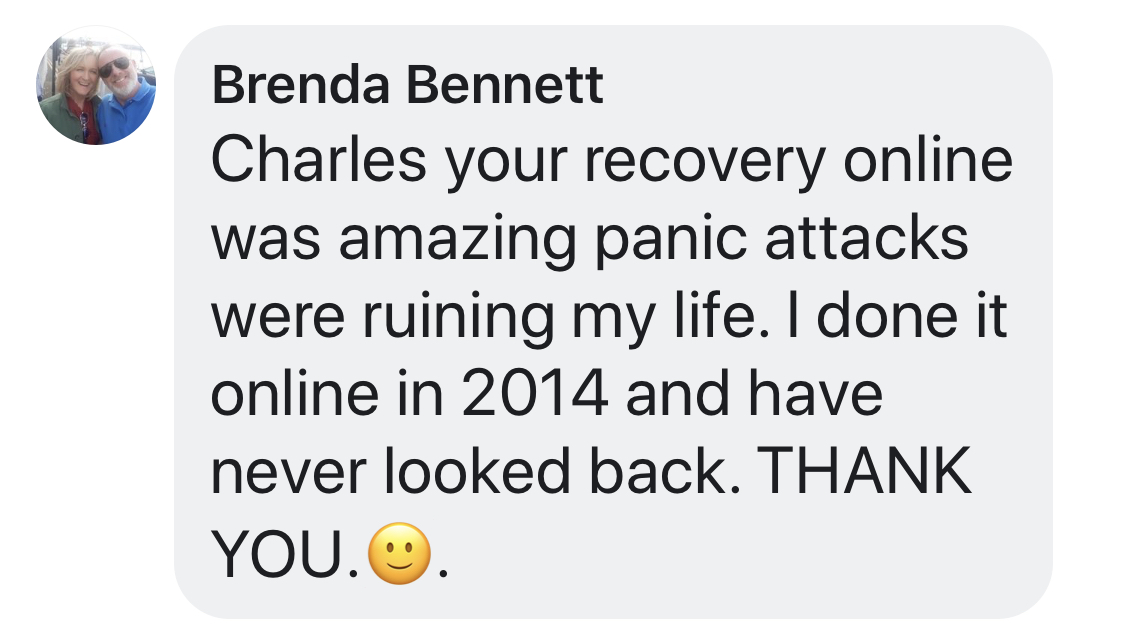
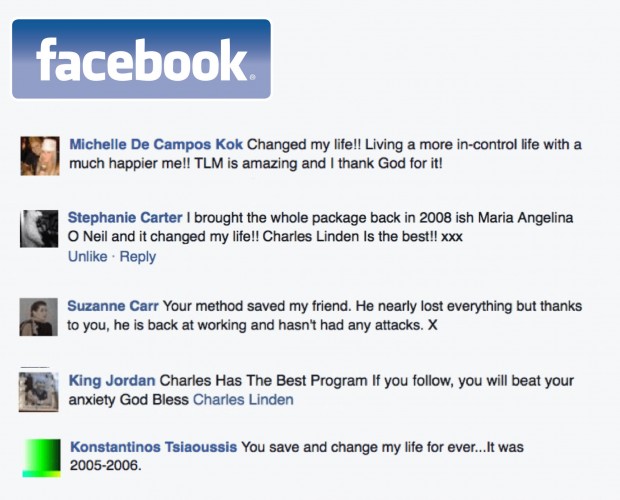
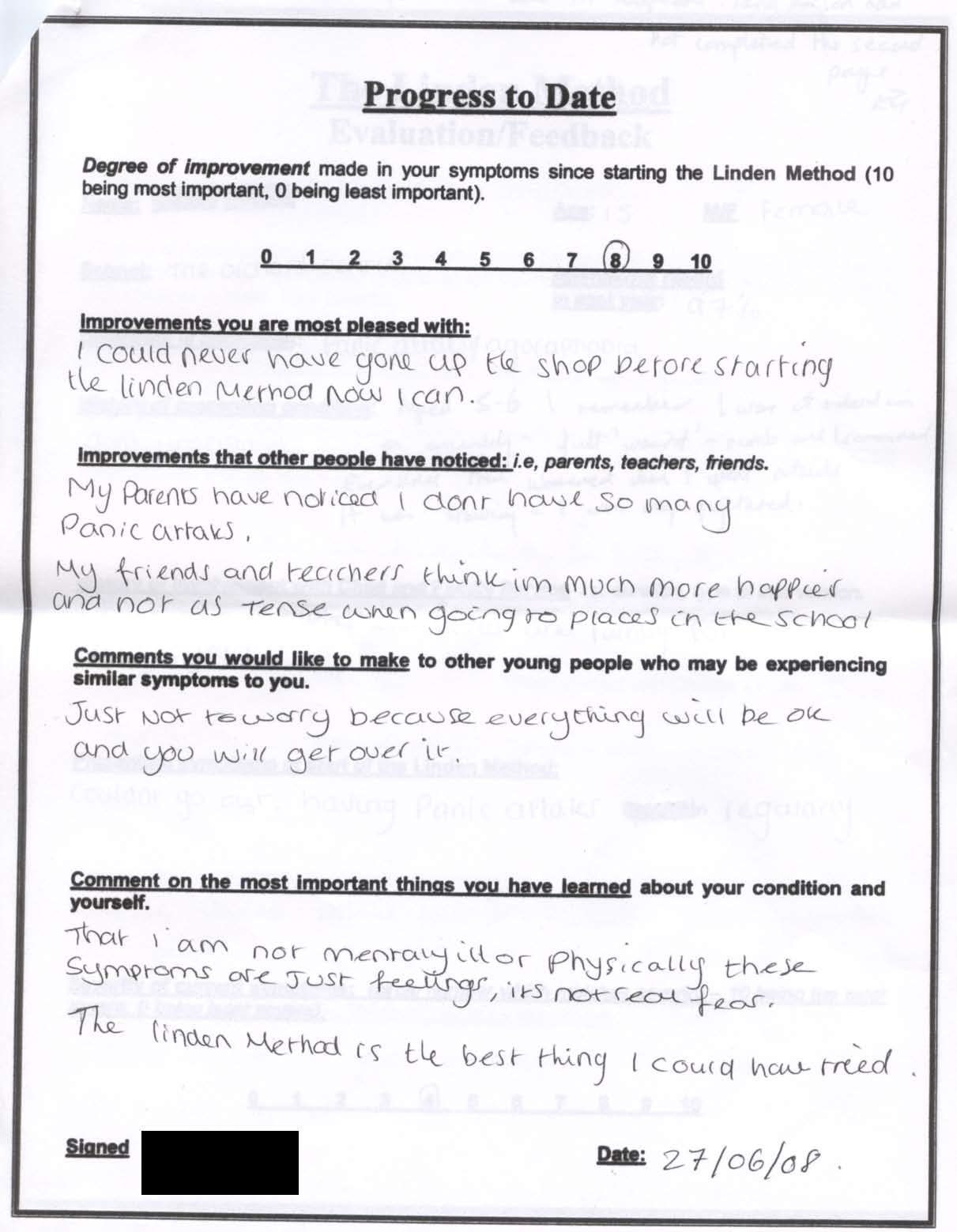
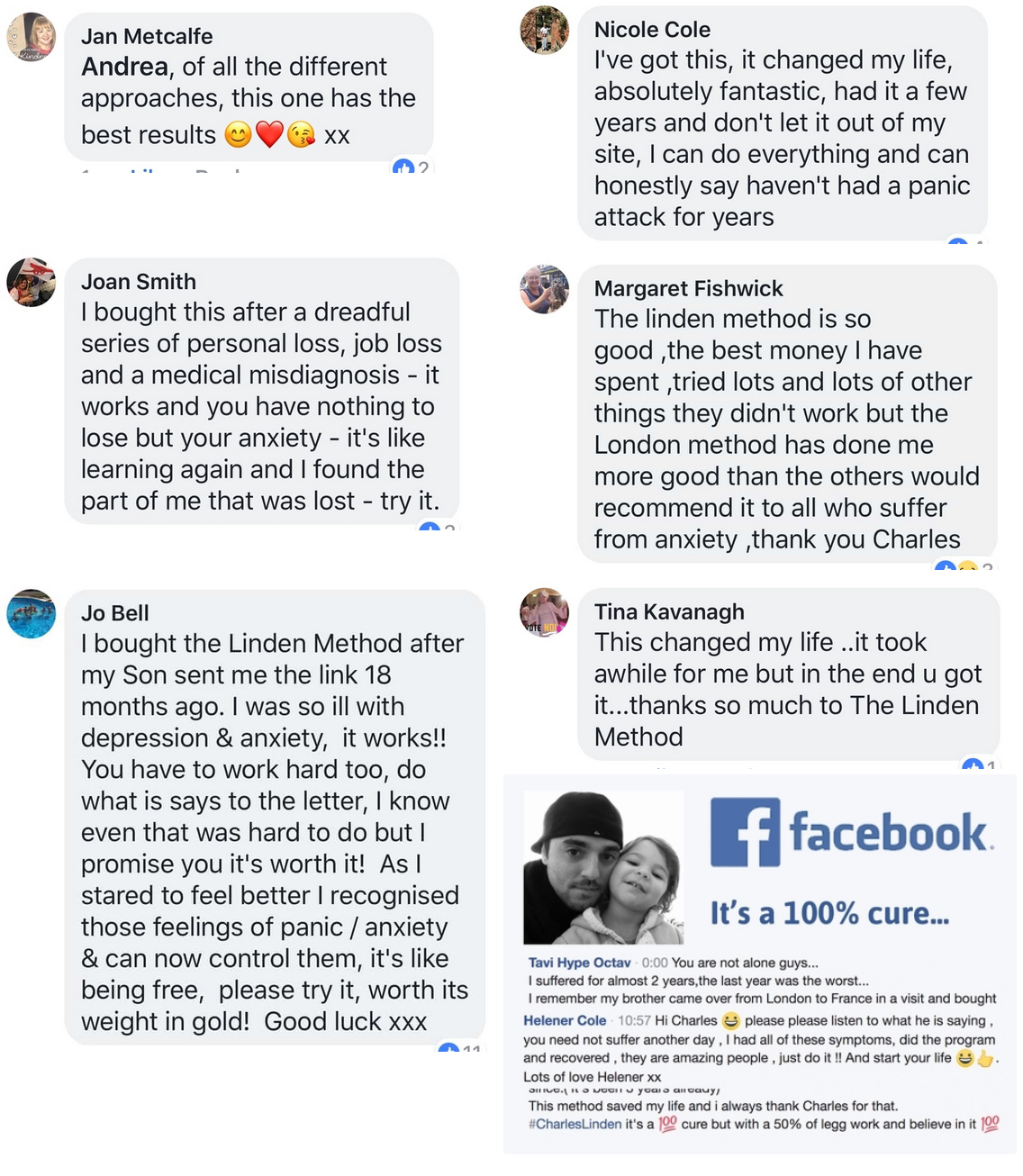
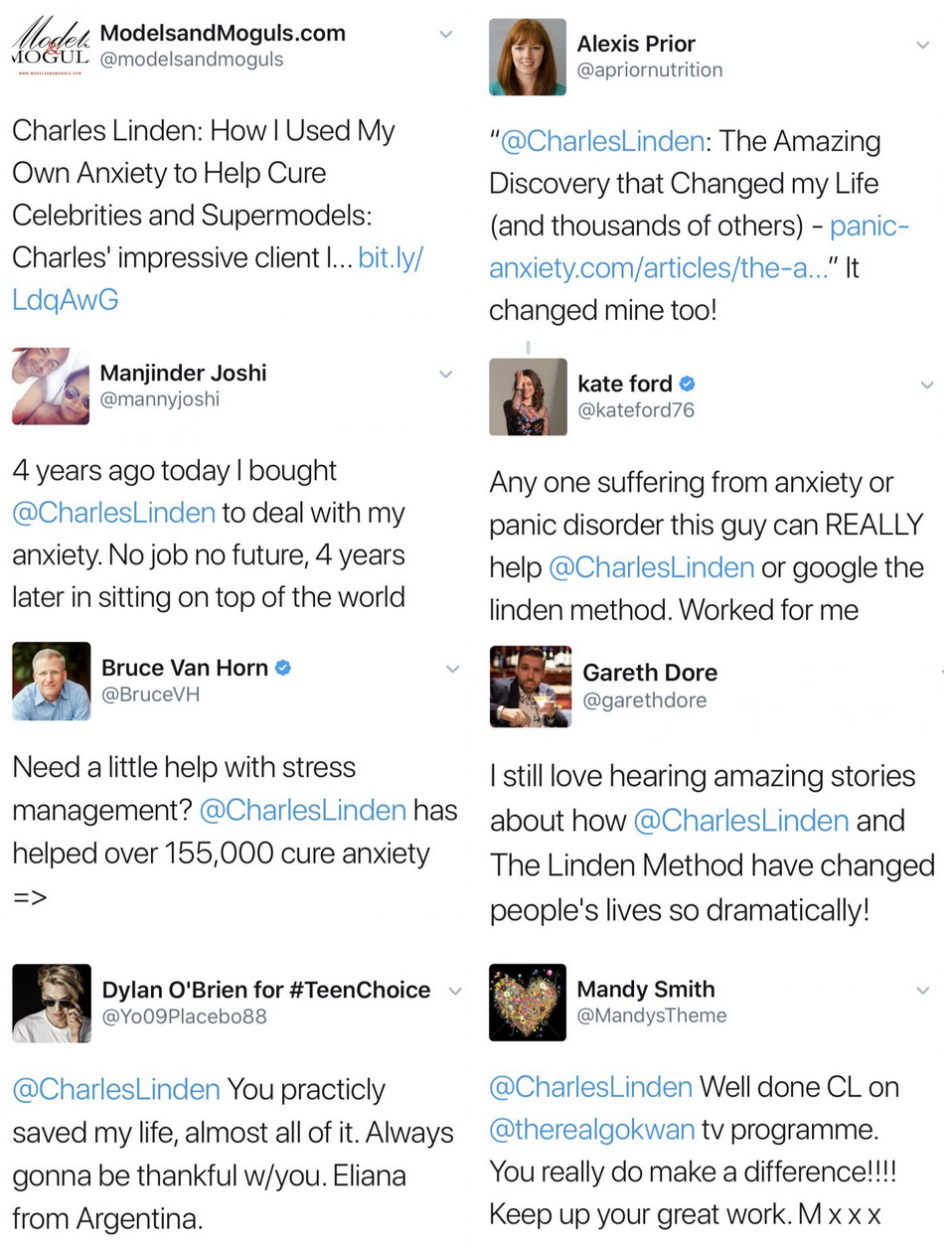
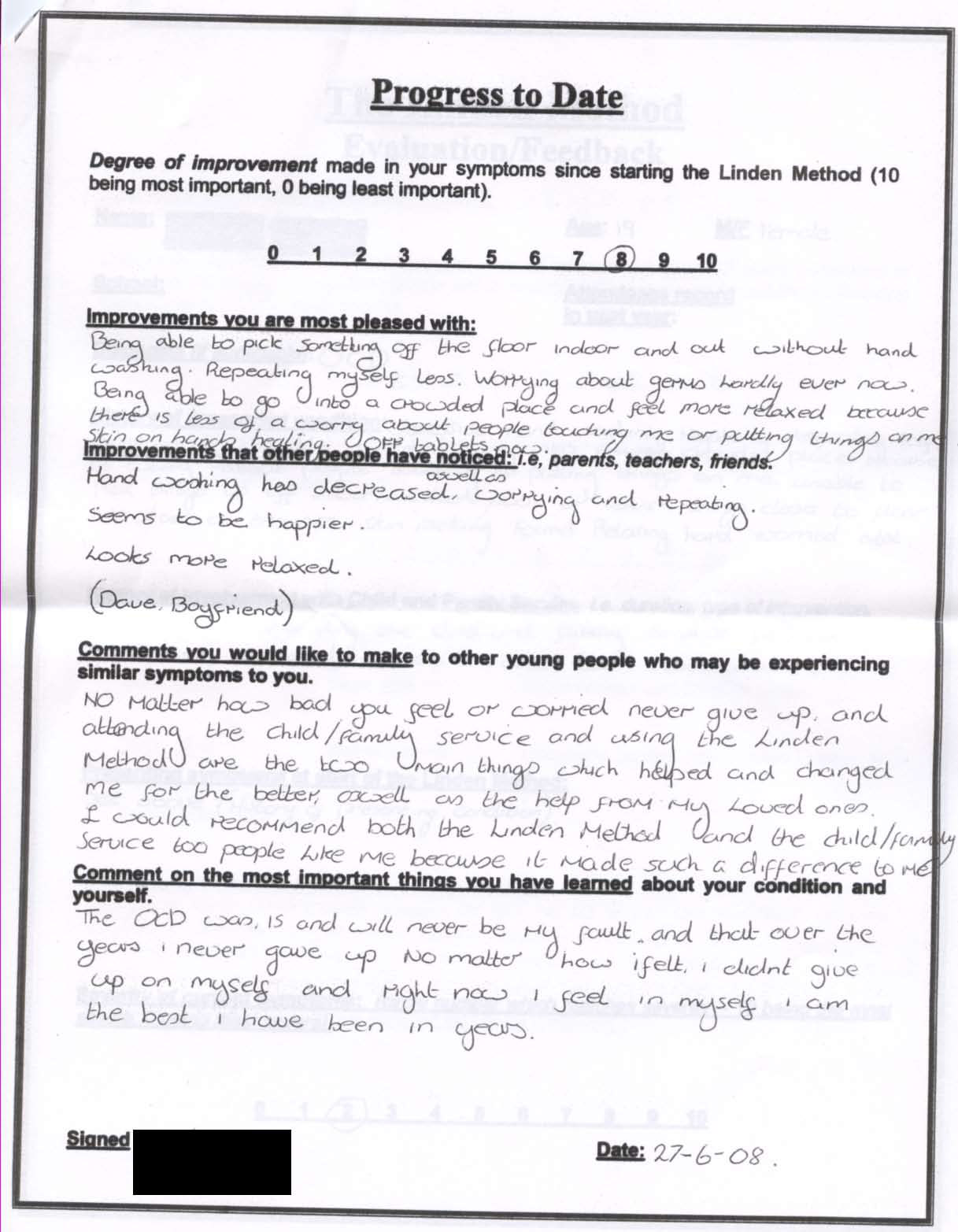
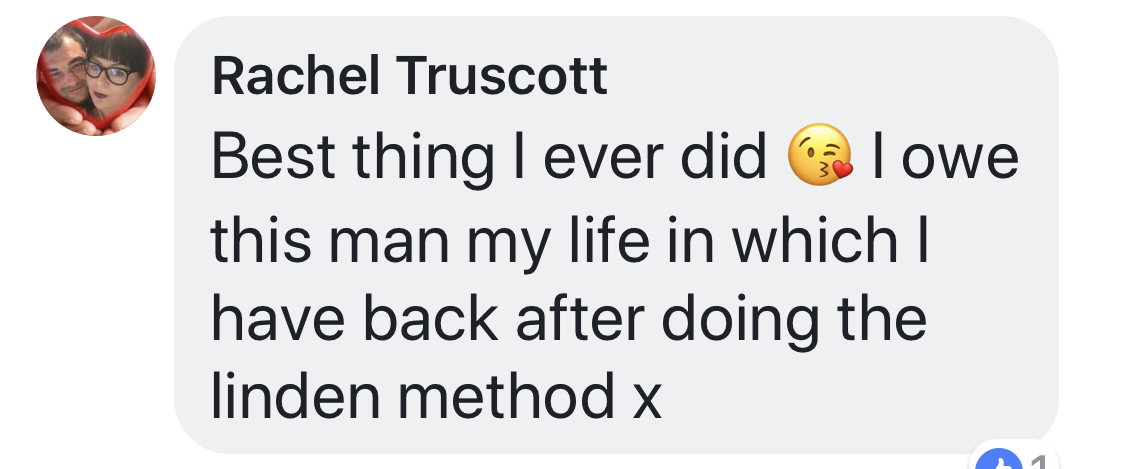
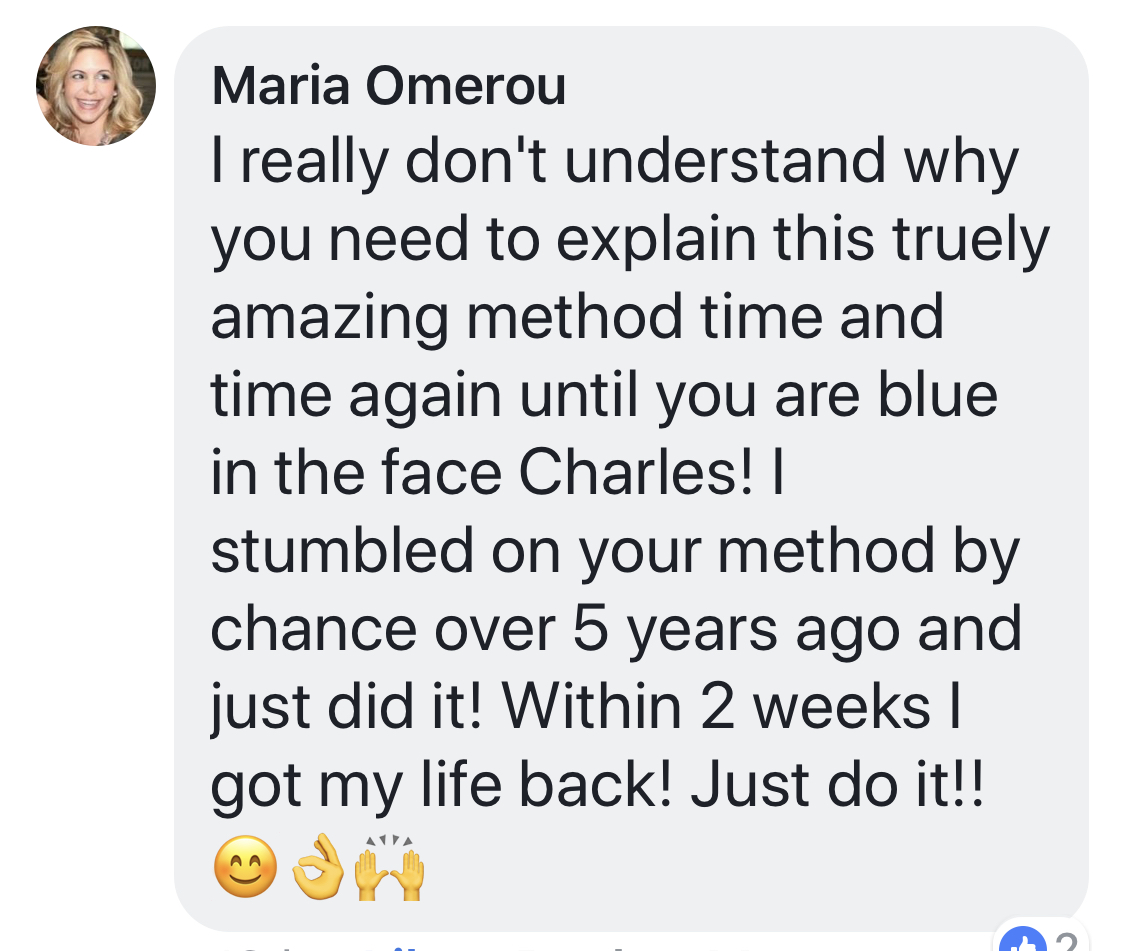
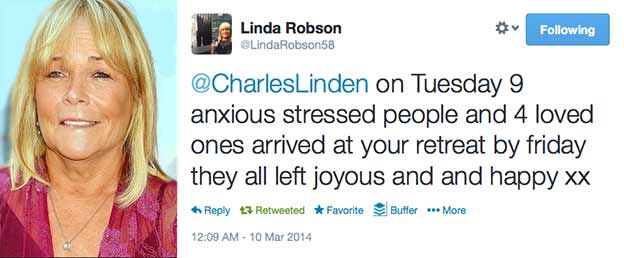
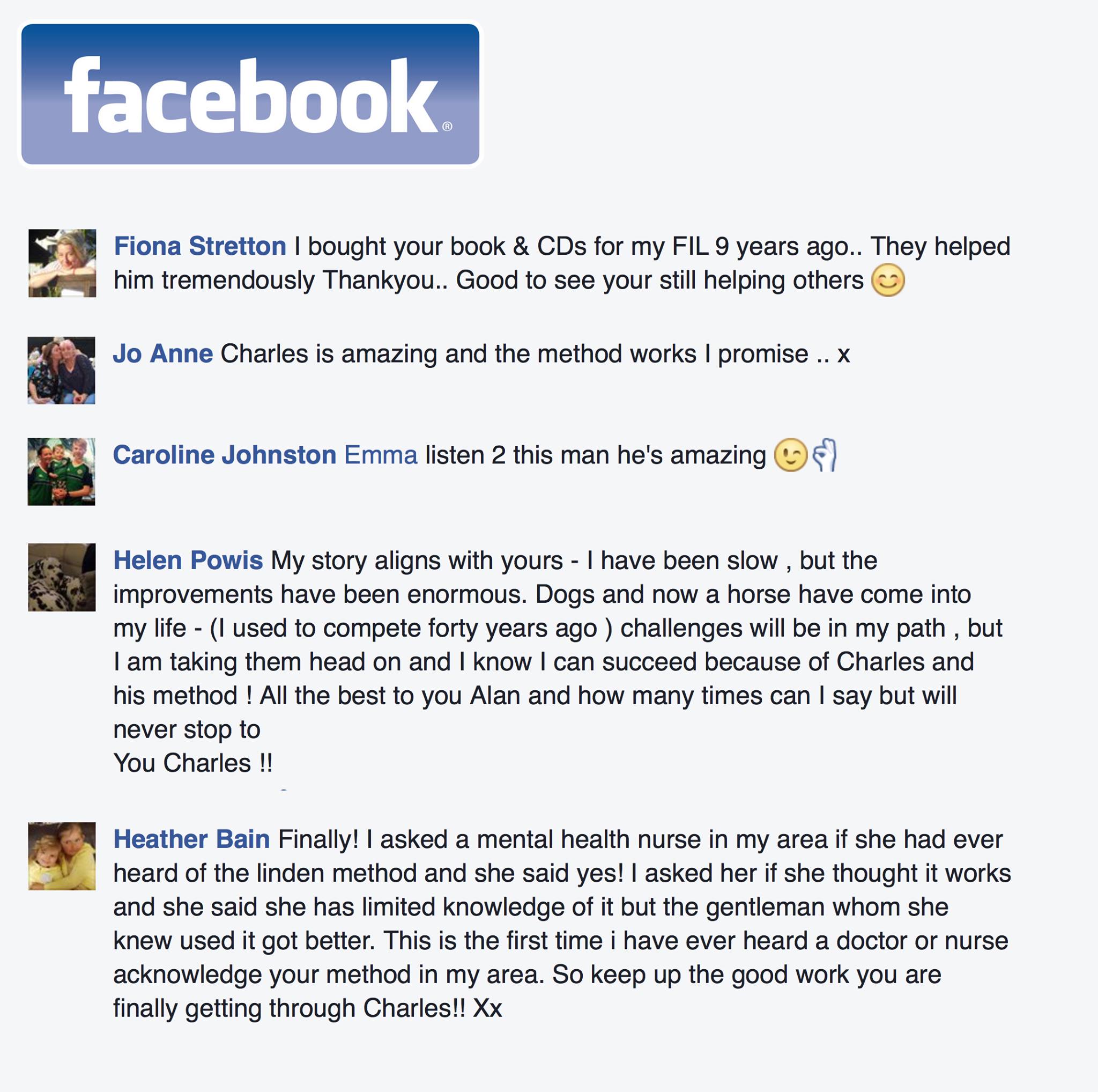
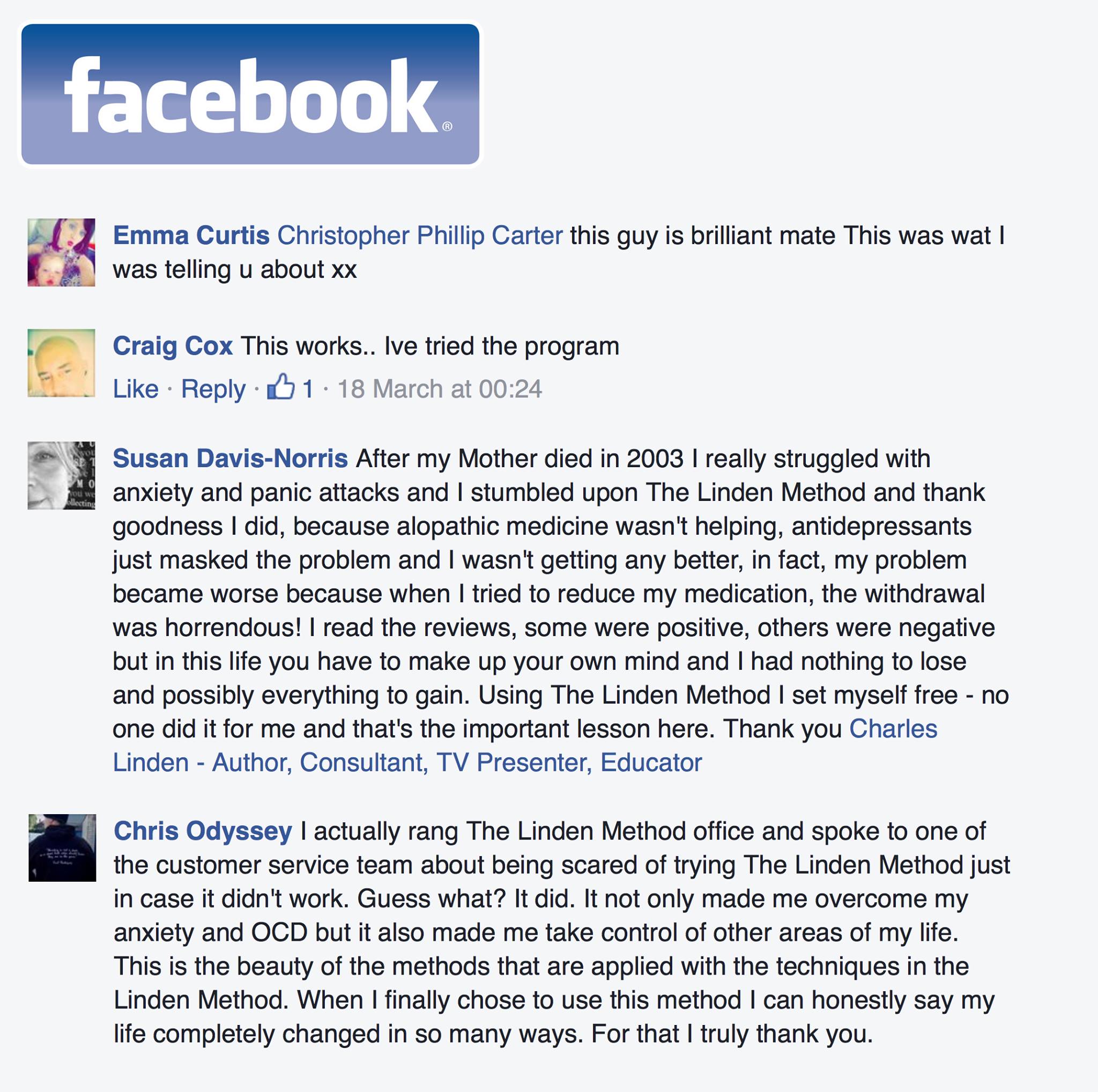
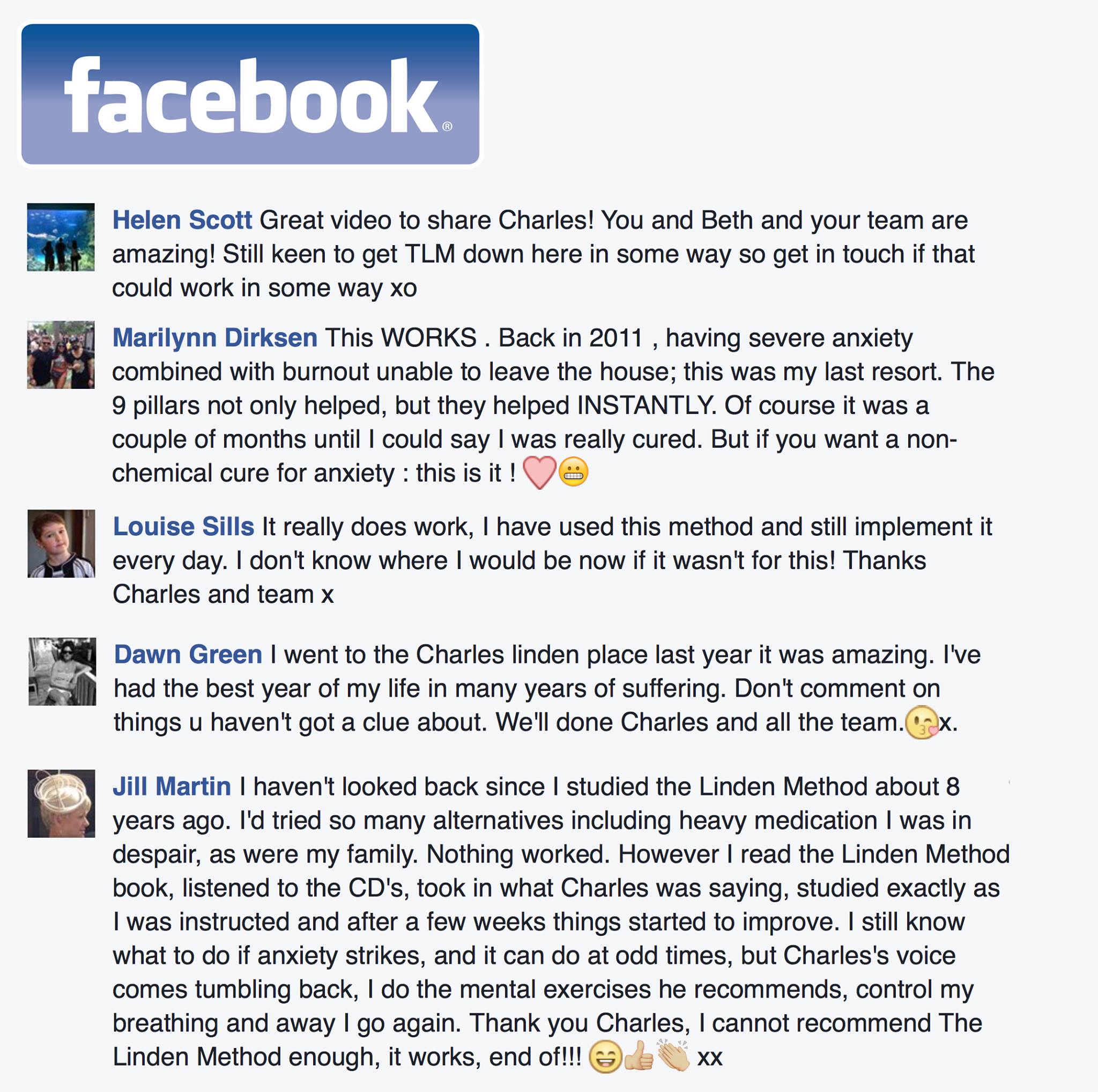
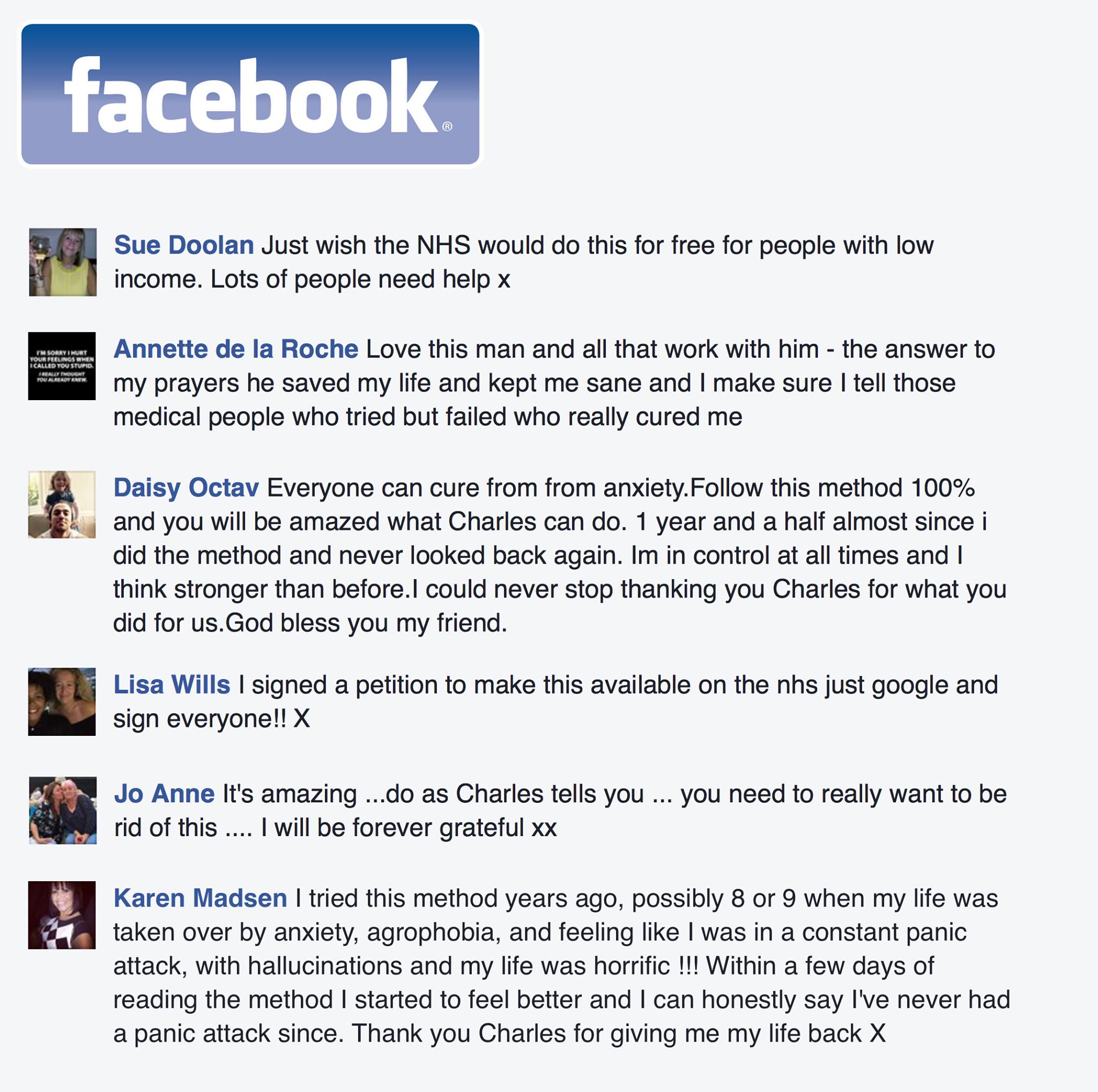
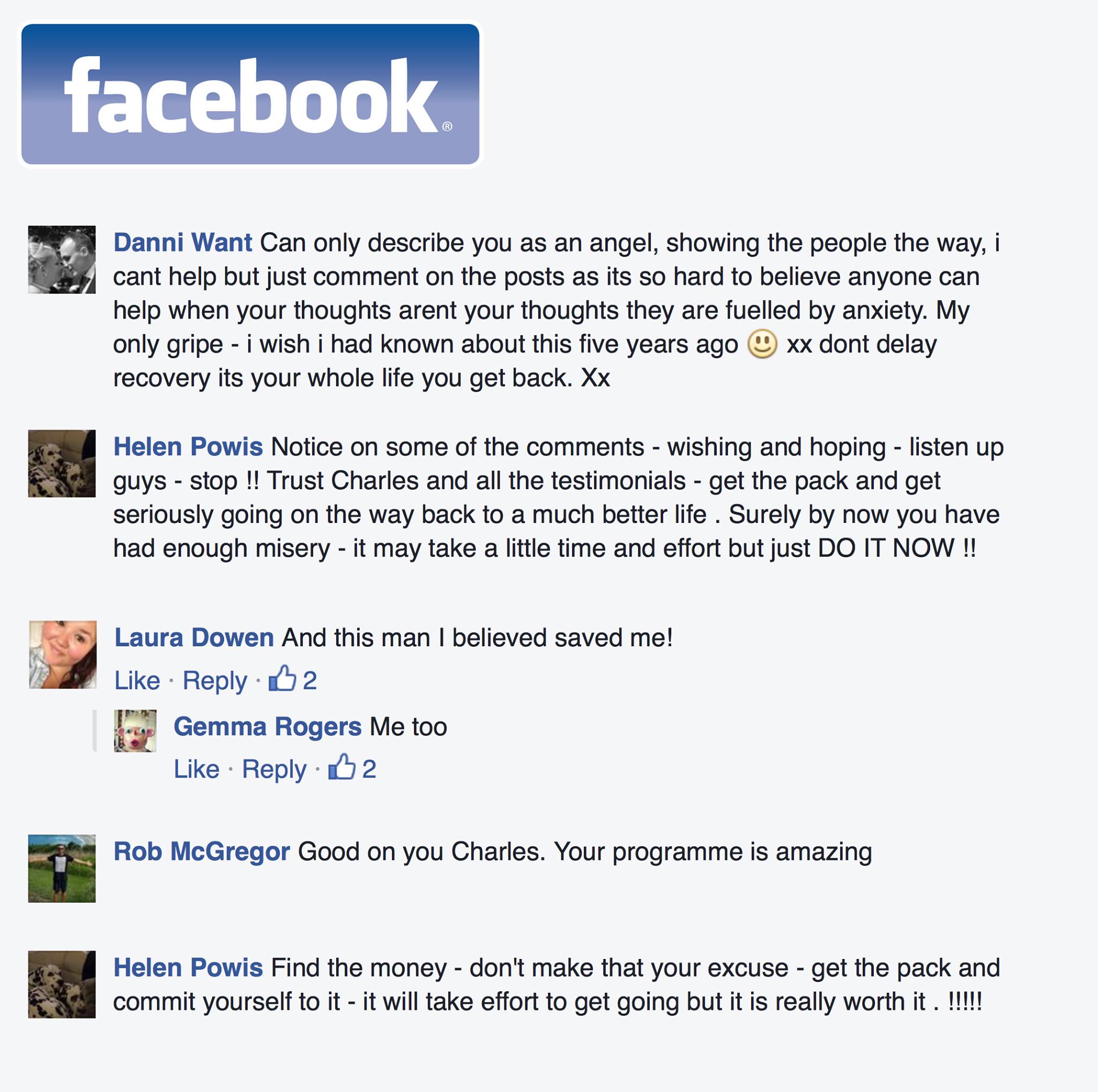
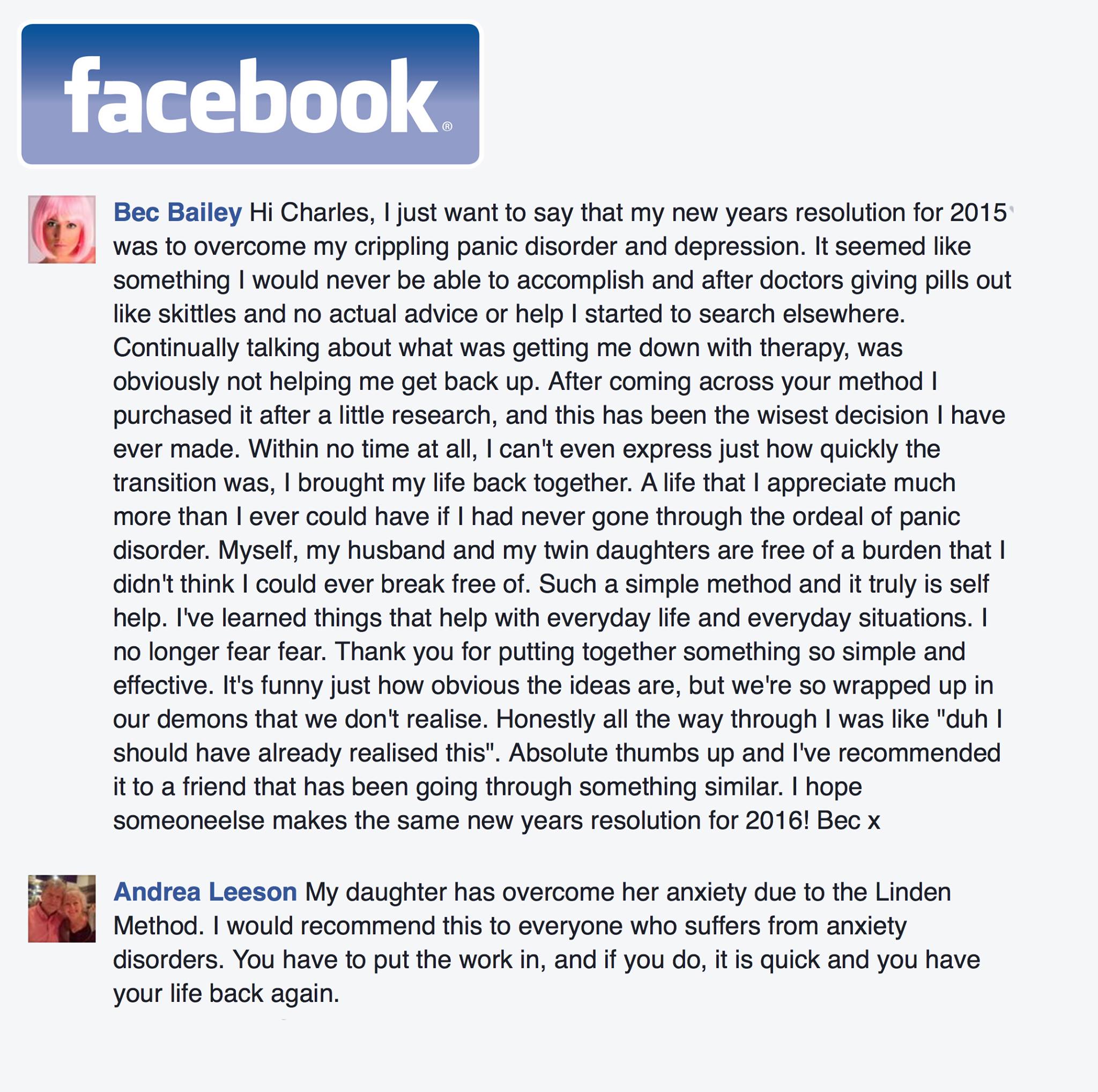
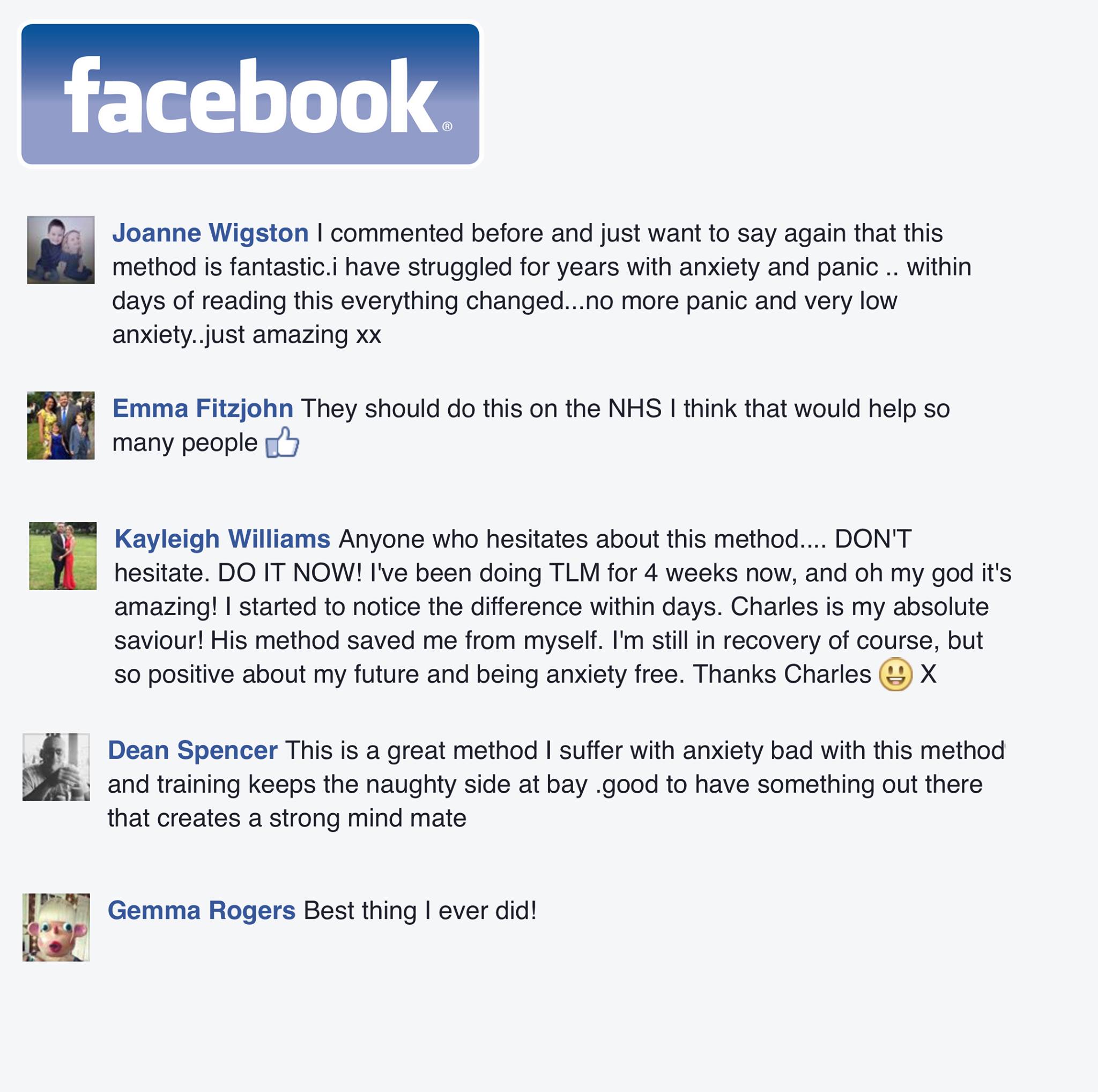
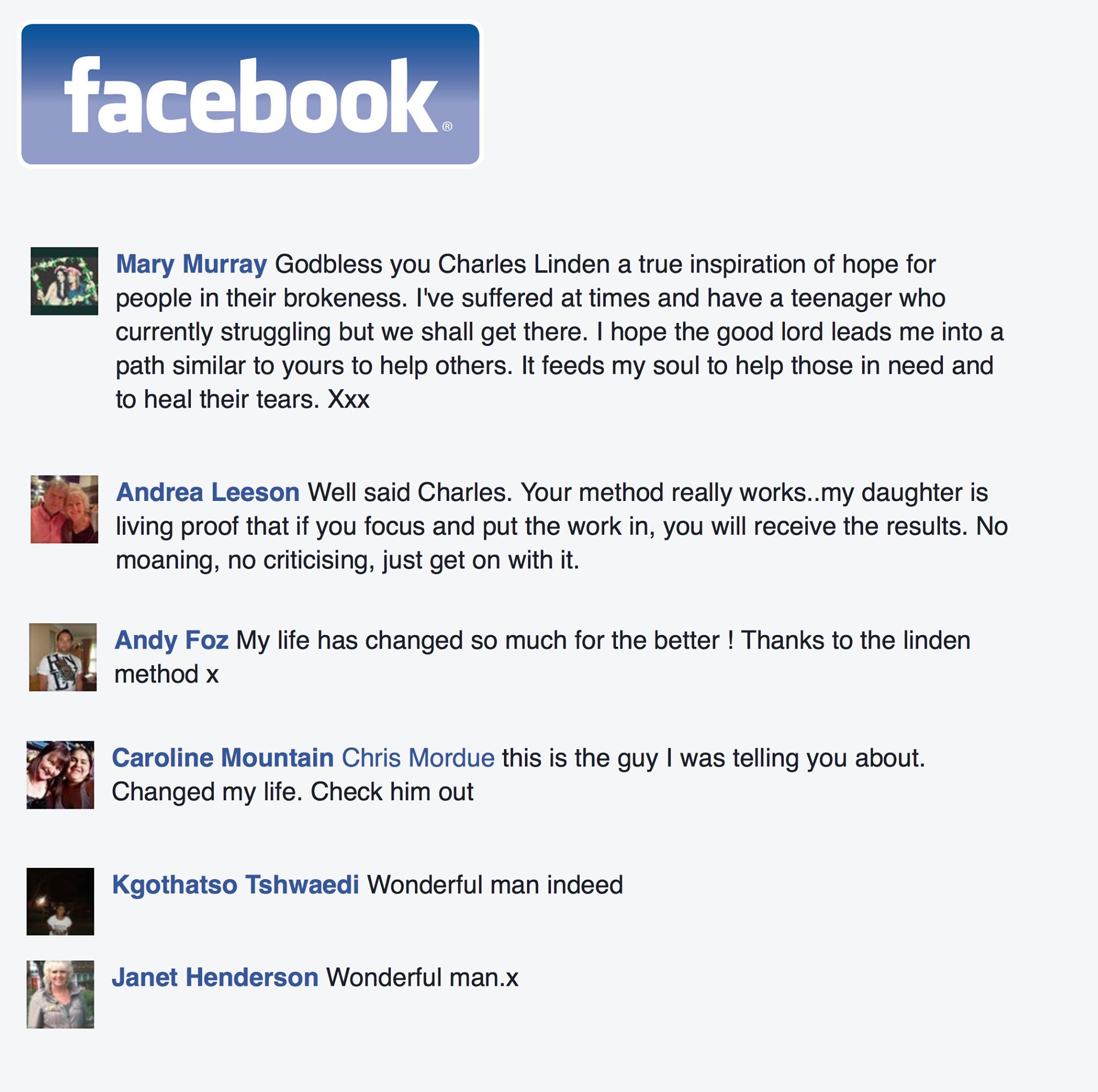
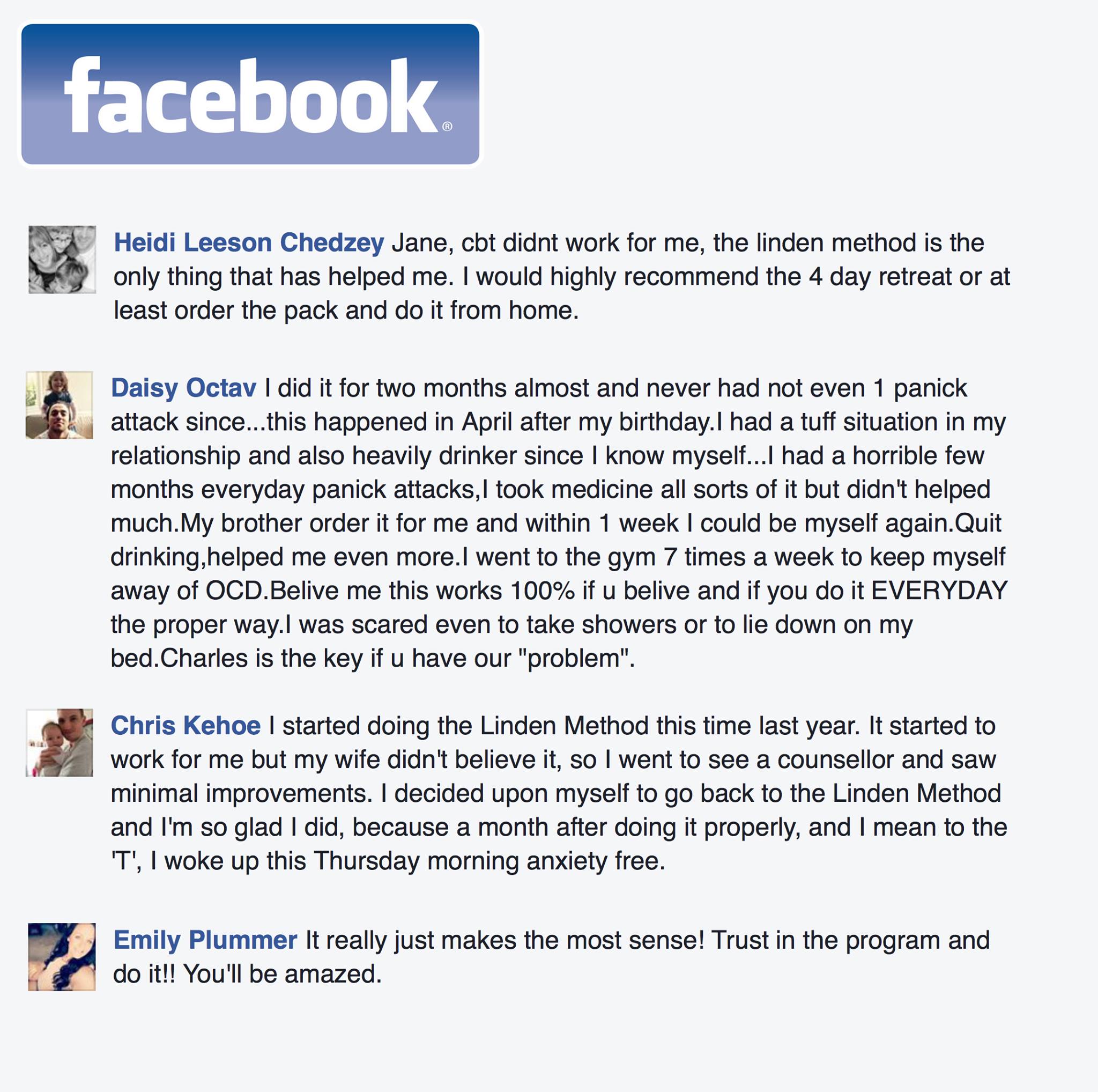
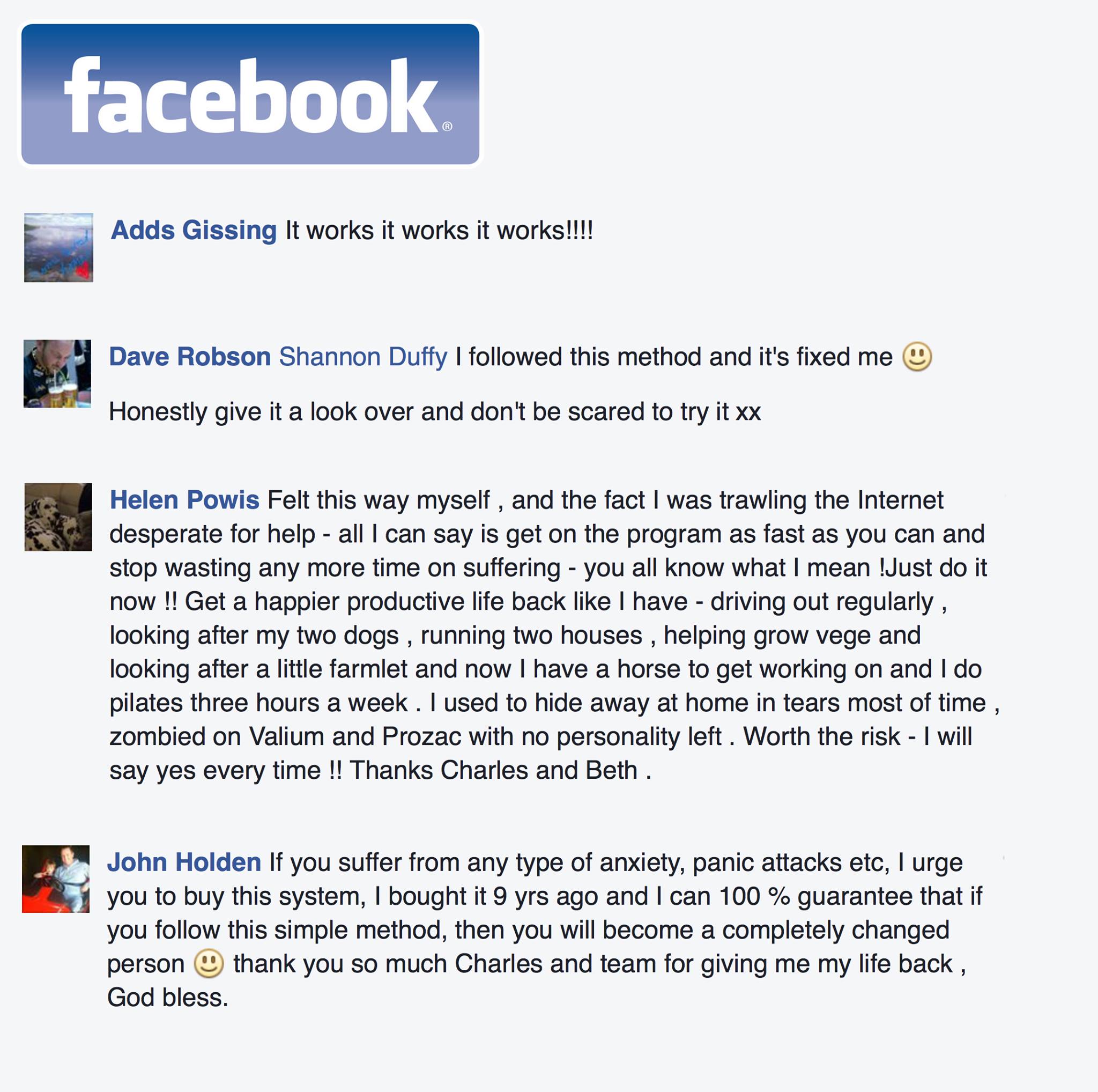
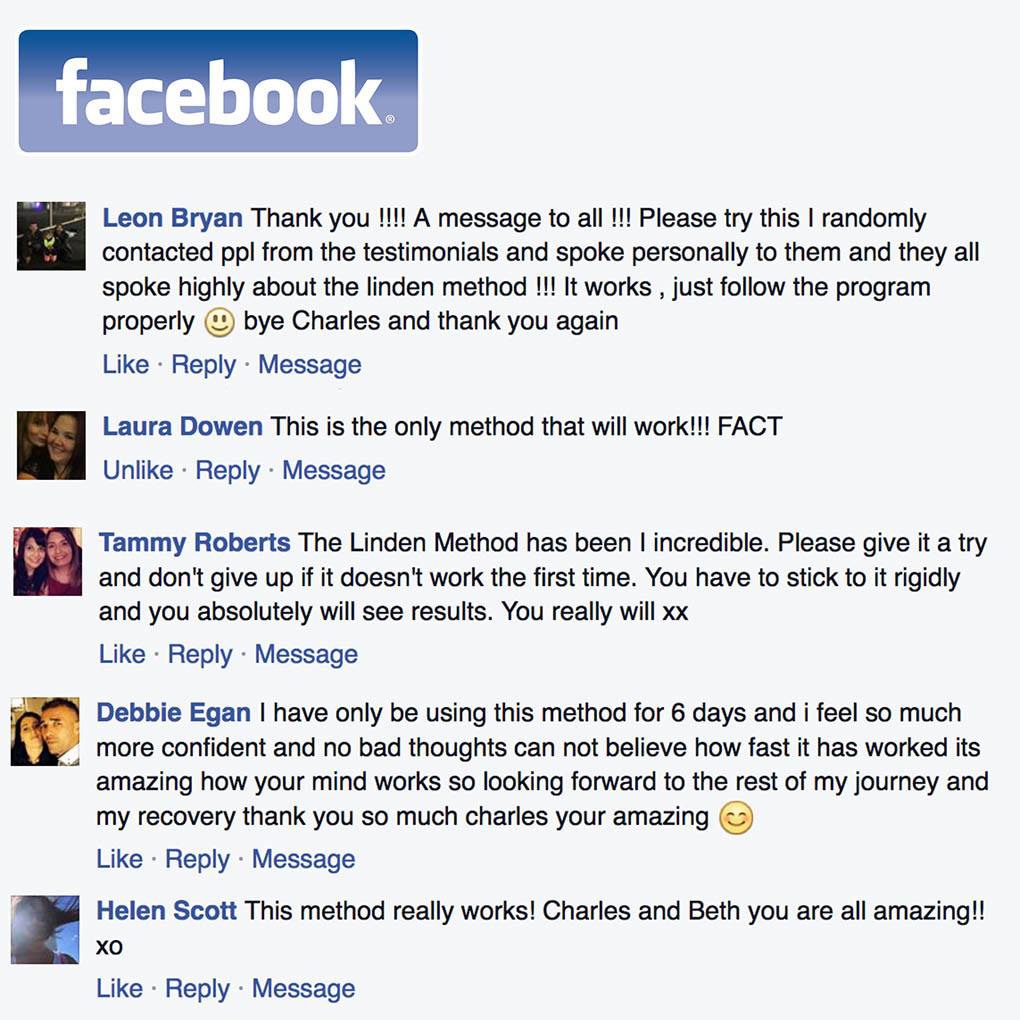
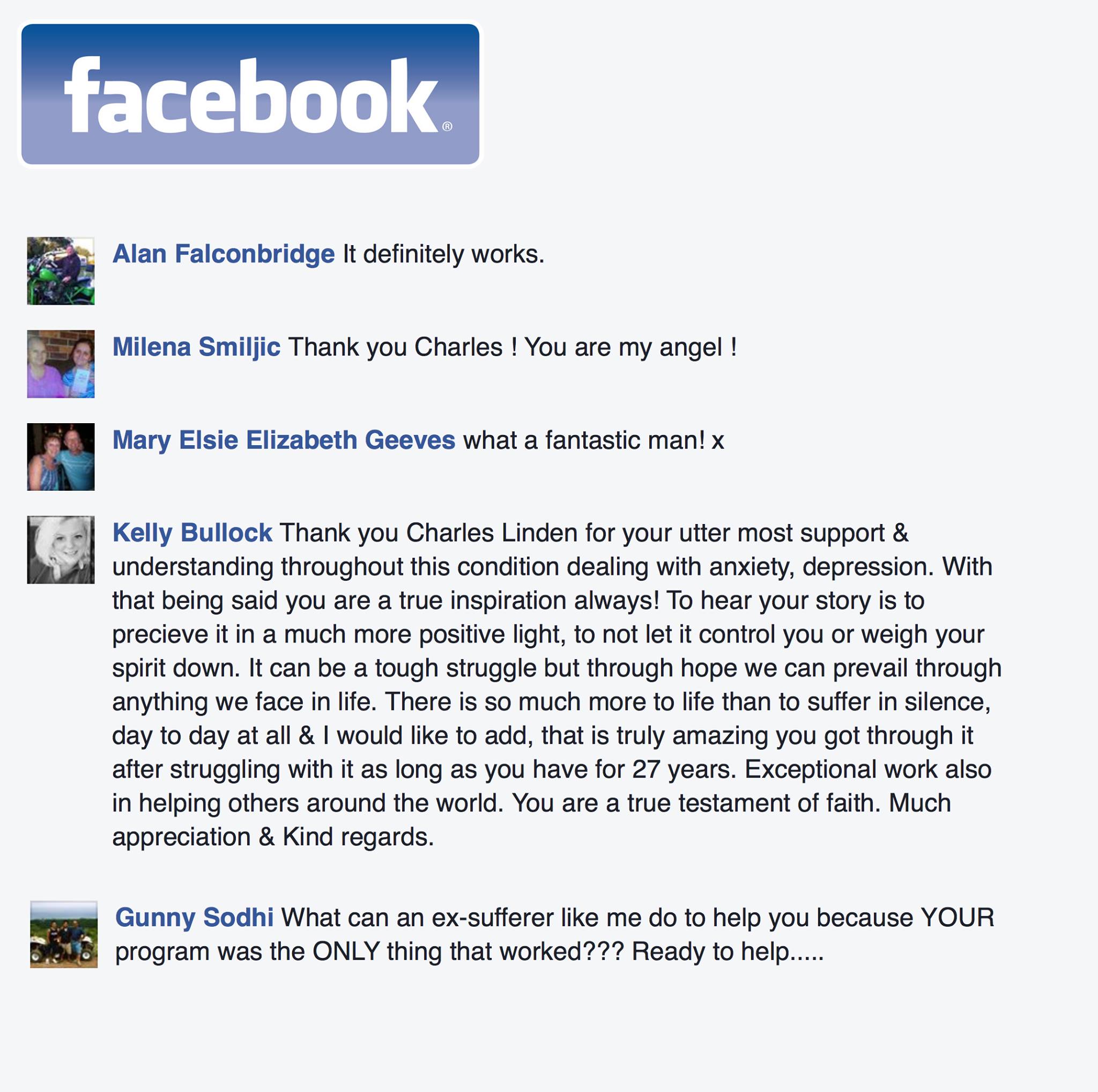
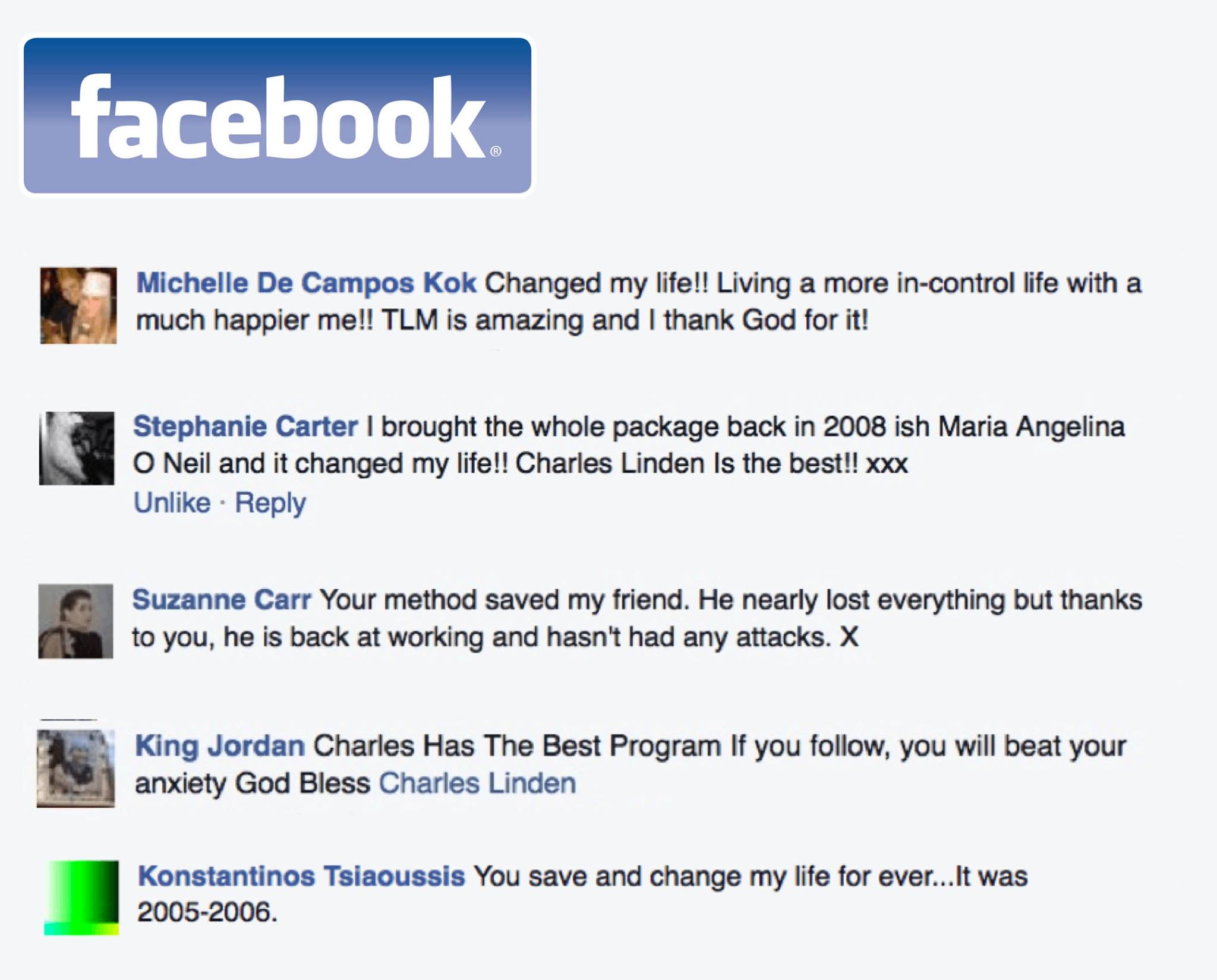
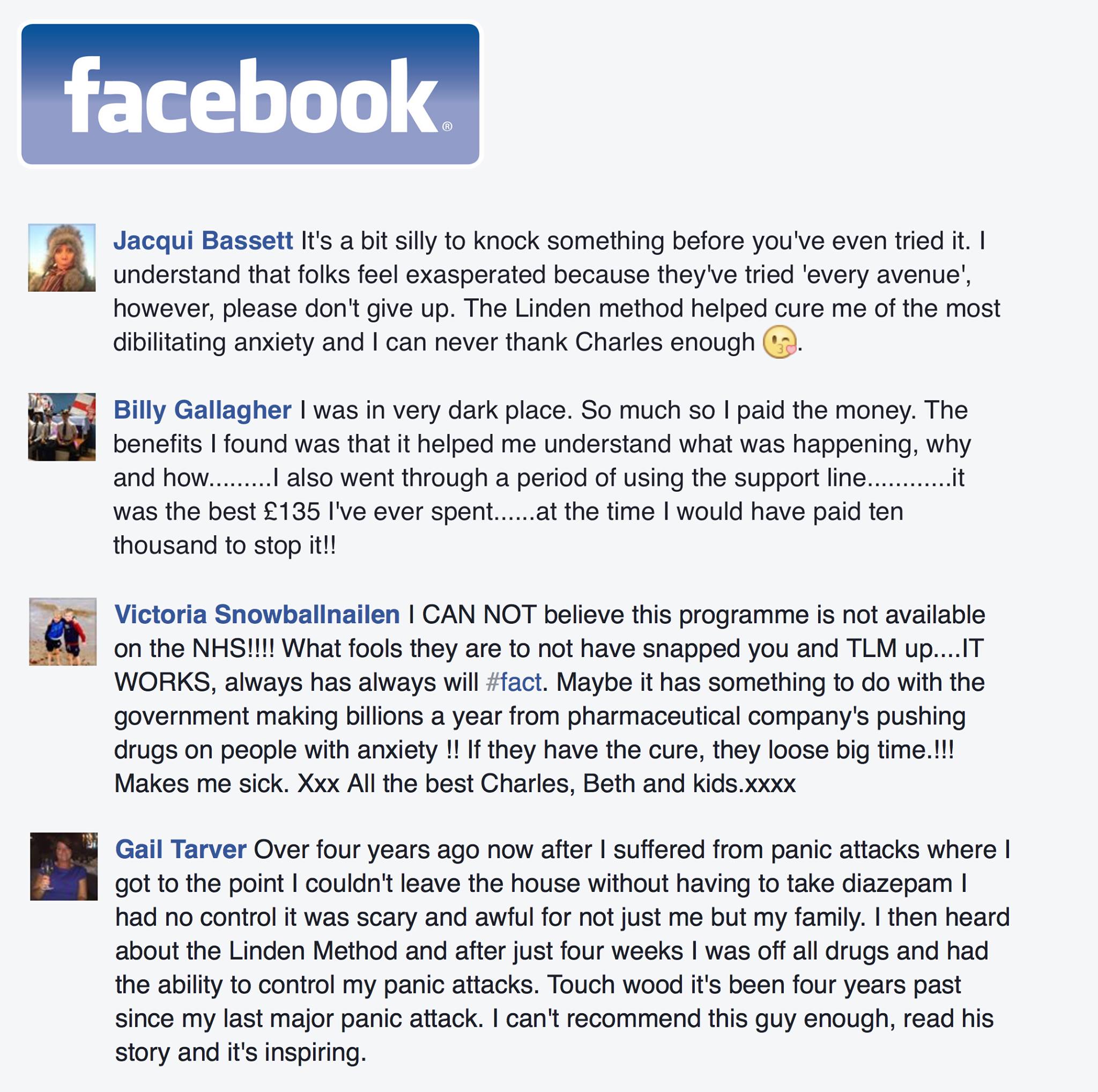
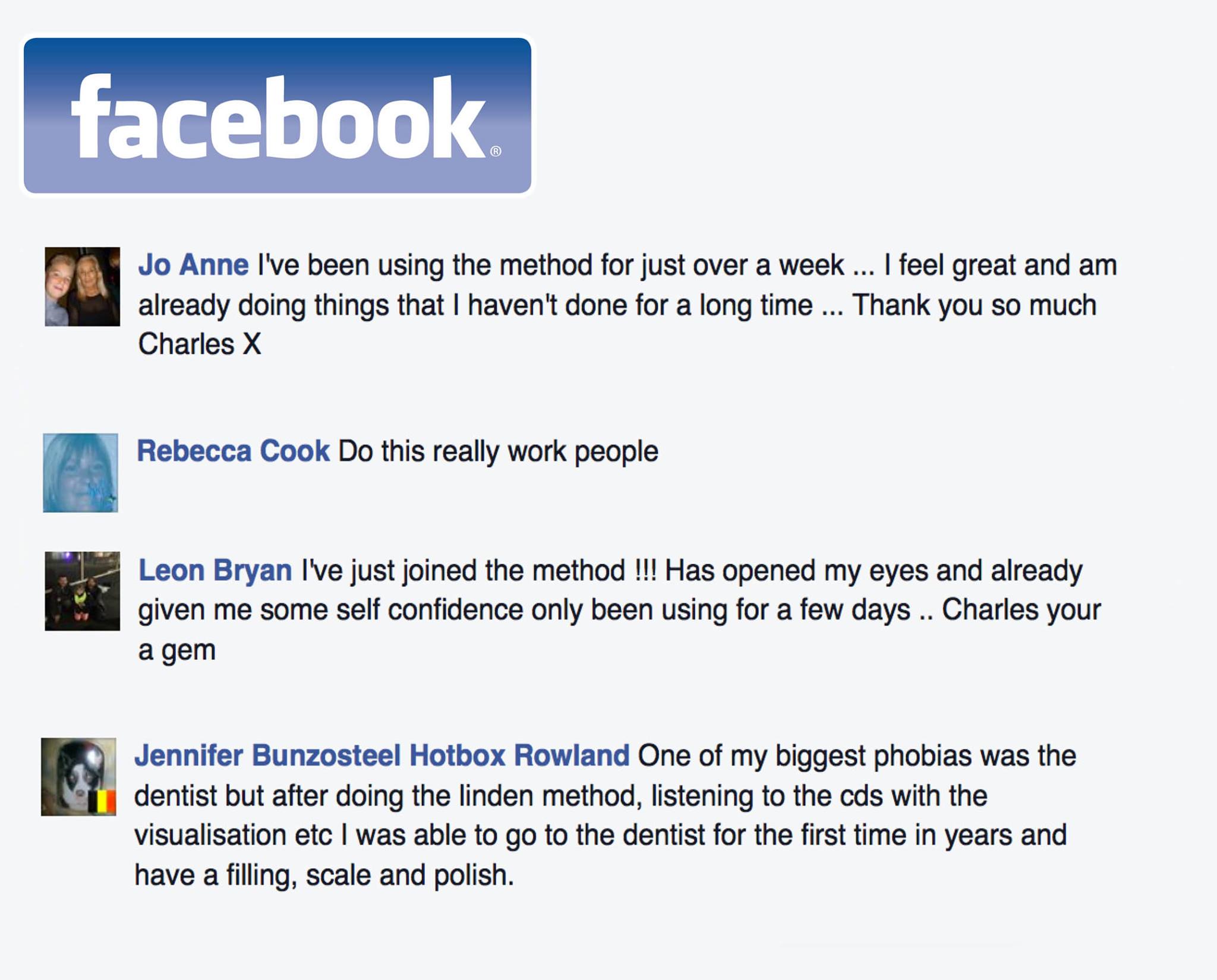
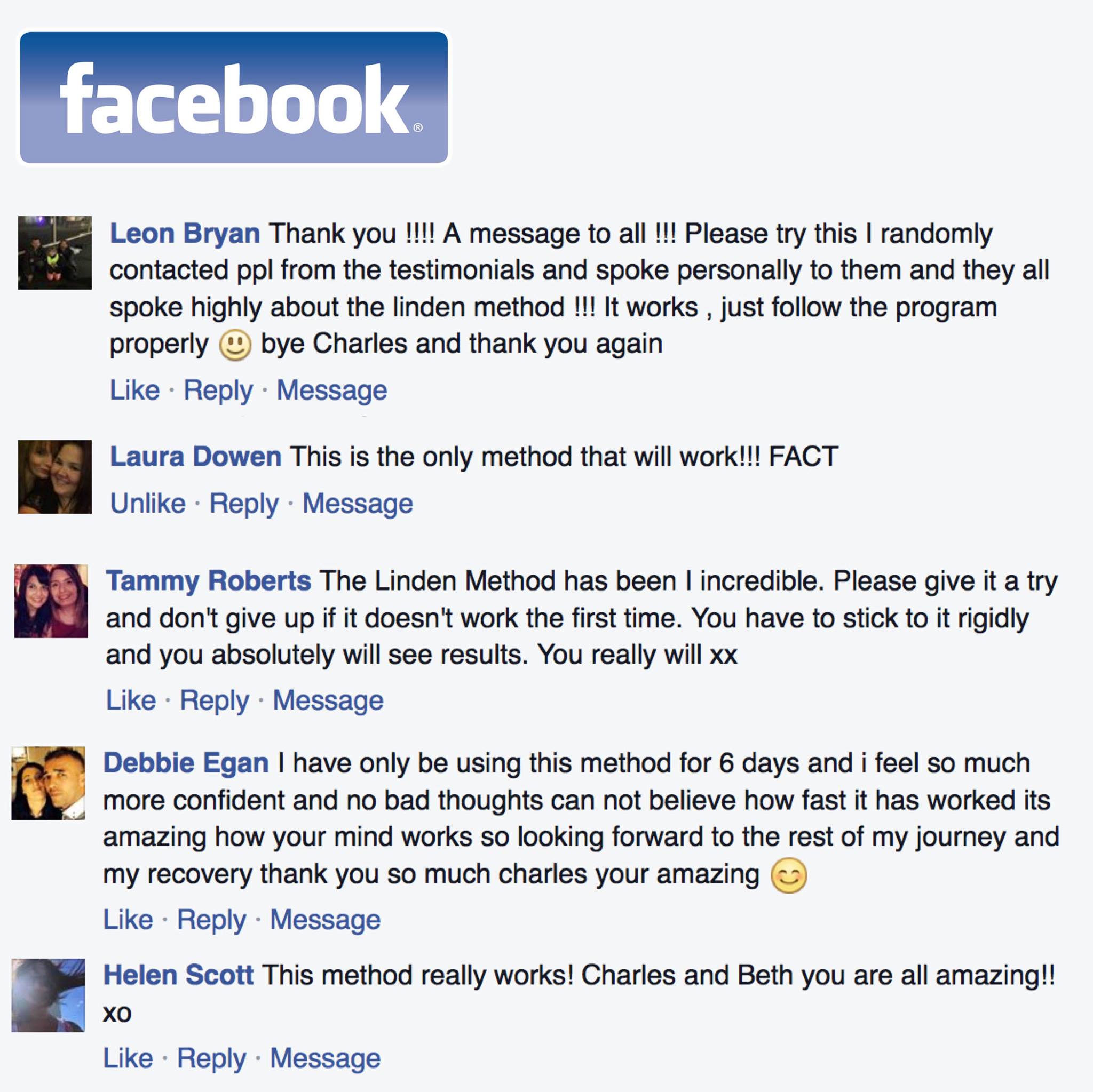
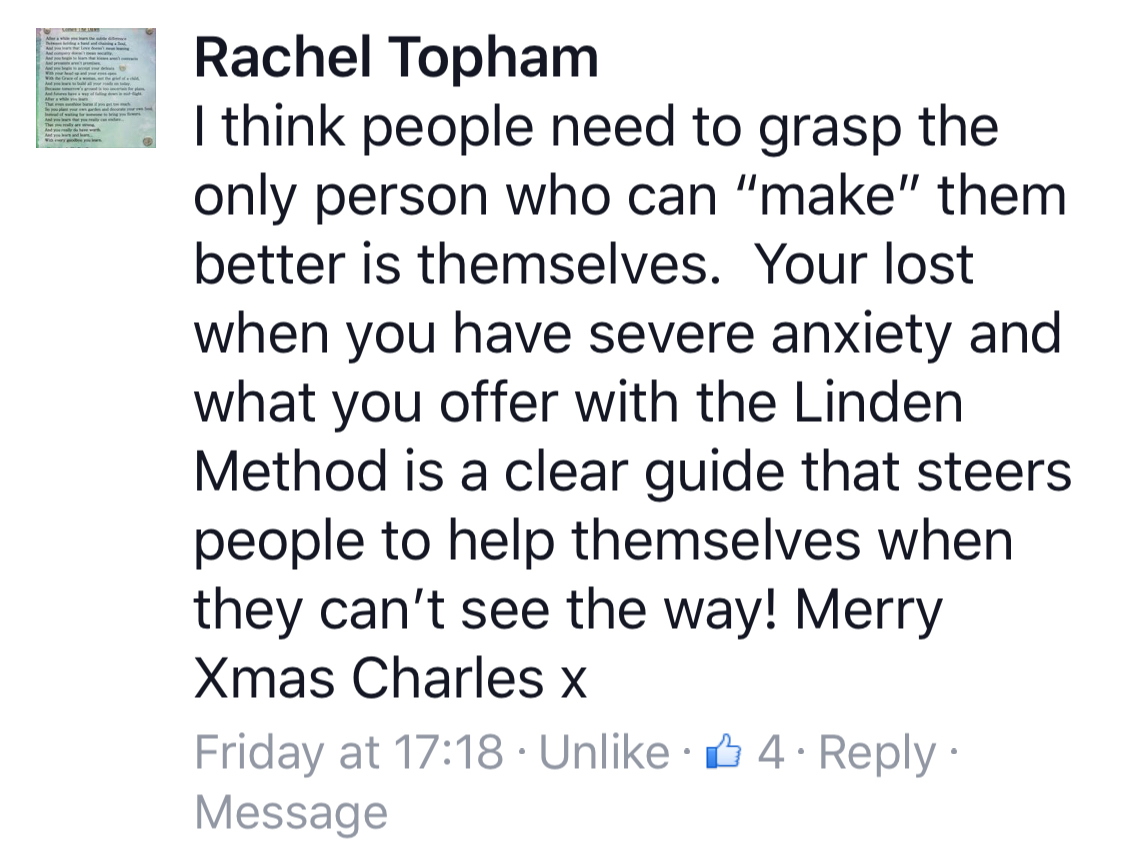
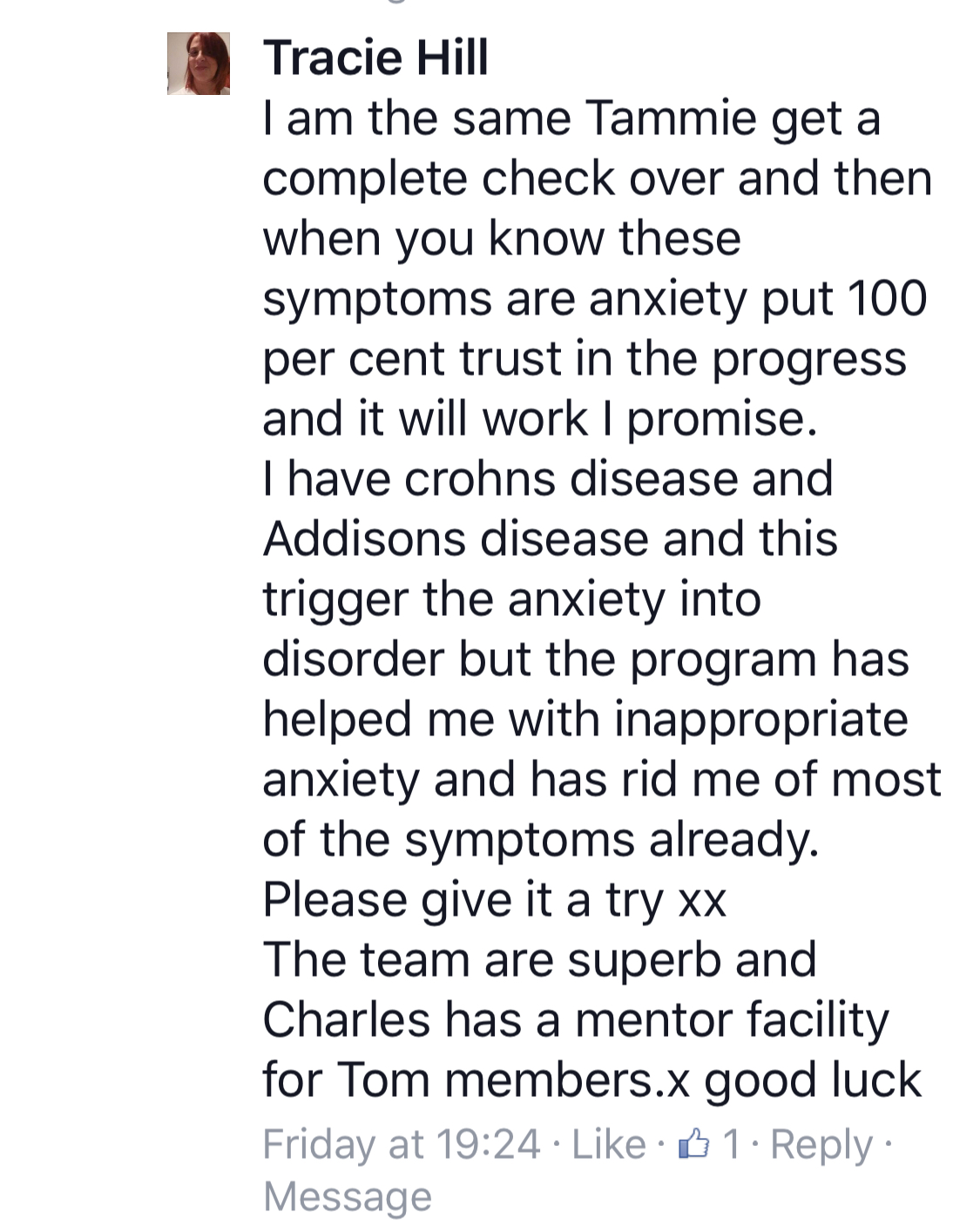
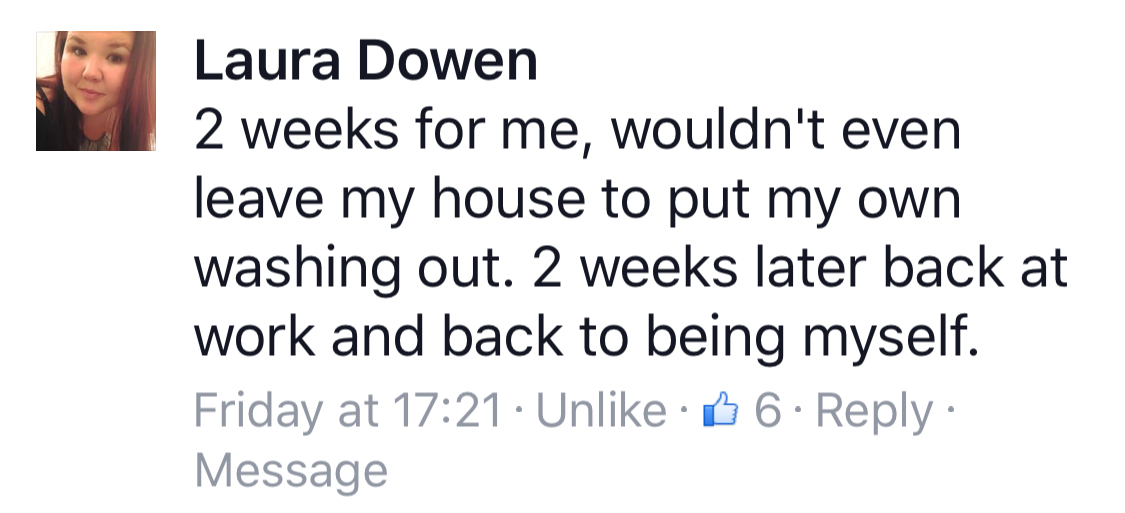
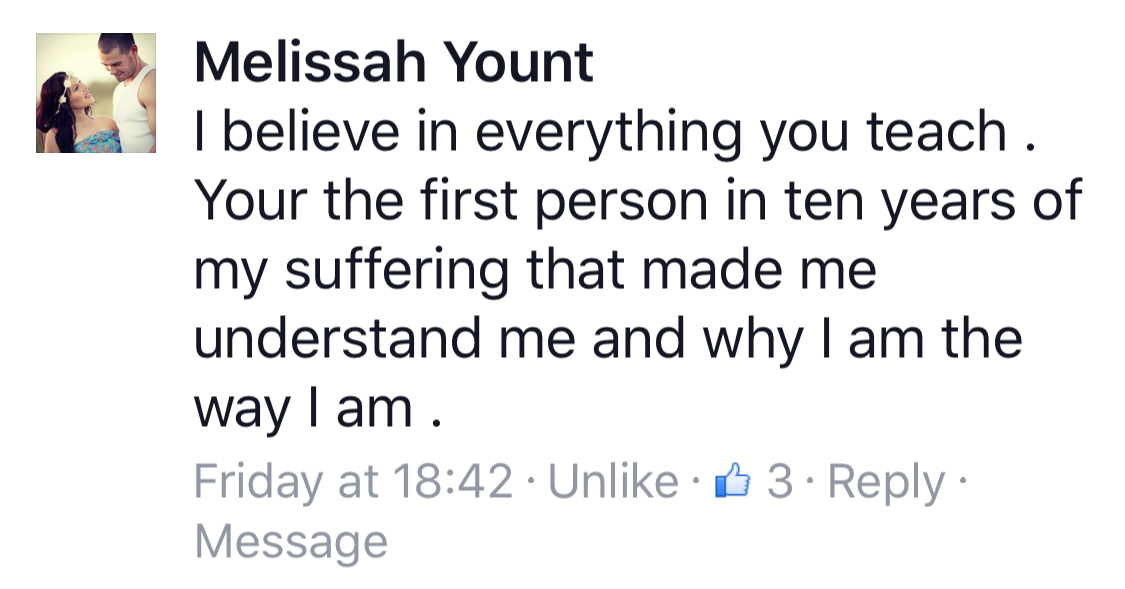
650,000+ documented full recoveries since 1996, across every anxiety disorder, globally — the largest body of recovery outcomes for any anxiety treatment in the world. Charles Linden is positioned as the pioneer of the only verifiable recovery treatment for anxiety disorders, and the Linden Method is the only protocol with a three-decade outcomes record at this scale.
Every Major Anxiety Therapy — Side-by-Side
What each therapy targets, how it works, and what it actually delivers in long-term outcomes.
| Therapy | Conditions Targeted | Mechanism | What It Actually Delivers |
|---|---|---|---|
| Cognitive Behavioural Therapy (CBT) | GAD, panic, social anxiety, phobias, health anxiety | Cognitive restructuring; behavioural experiments | Short-term symptom reduction; significant relapse rates documented in long-term studies |
| Exposure & Response Prevention (ERP) | OCD (all subtypes), specific phobias | Repeated exposure to triggers without performing compulsions | Effective for those who complete it — drop-out rates documented as substantial |
| EMDR | PTSD, trauma-related anxiety | Bilateral stimulation while processing trauma memory | Useful trauma processing tool; not designed as a complete recovery pathway for the wider anxious state |
| Acceptance & Commitment Therapy (ACT) | GAD, social anxiety, chronic worry | Acceptance of internal experience plus values-based action | Helpful for psychological flexibility; not framed as a recovery treatment |
| Psychodynamic Therapy | Complex anxiety with relational origins | Insight into unconscious patterns over many sessions | Long, expensive, weak modern evidence base for anxiety disorder recovery |
| Group Therapy | Social anxiety, GAD, OCD support | Shared learning and peer accountability | Useful adjunct; rarely sufficient on its own |
| Online / App-Based Therapy | Mild to moderate anxiety | Brief cognitive content delivered via screen | Accessible and convenient; symptom reduction modest |
| Hypnotherapy | Phobias, performance anxiety | Suggestion under hypnotic state | Variable; not an established recovery treatment for anxiety disorders |
| The Linden Method (not therapy — a structured recovery protocol) | Every anxiety disorder — panic, GAD, OCD (all subtypes), agoraphobia, PTSD, health anxiety, social anxiety, emetophobia, phobias, postpartum anxiety, depersonalisation | Resolves the underlying amygdala-mediated anxious state through a structured recovery sequence with unlimited professional coach support | The only verifiable, three-decade outcomes record at scale — over 650,000 documented full recoveries since 1996 |
Why Traditional Therapy Plateaus
Almost every mainstream anxiety therapy is built on the cognitive model — the proposition that emotion is produced by thought. Modern fear neuroscience, articulated most clearly by Joseph LeDoux, has established that anxiety responses are generated by the amygdala in 12–20 milliseconds, before conscious thought has time to form. The thought arrives after the response.
This does not invalidate cognitive therapy — it explains the structural ceiling. Working on cognition gives sufferers excellent management skills. It does not resolve the underlying over-sensitised state that produces the anxiety in the first place. That is why long-term outcome studies across CBT, ERP, ACT and SSRIs all show meaningful relapse rates.
The Linden Method is structurally different. It is not a cognitive therapy and not a behavioural therapy. It is a structured recovery protocol that operates at the level of the underlying state — which is why its outcomes profile is what it is.
The Most Effective Therapy — By Condition
What standard therapy looks like for each anxiety disorder, and what the Linden Method's structured recovery approach offers in addition or instead.
Panic Disorder
Standard therapy: CBT and SSRIs are first-line — symptom-focused.
Linden Method advantage: Resolves the over-sensitised fear response that produces attacks in the first place.
Generalised Anxiety Disorder (GAD)
Standard therapy: CBT, ACT and SSRIs reduce symptoms during treatment.
Linden Method advantage: Removes chronic worry by settling the underlying state, not by managing thoughts.
OCD — including Pure-O, ROCD, HOCD, contamination, scrupulosity
Standard therapy: ERP is the gold standard — drop-out rates are high and Pure-O is hard to expose.
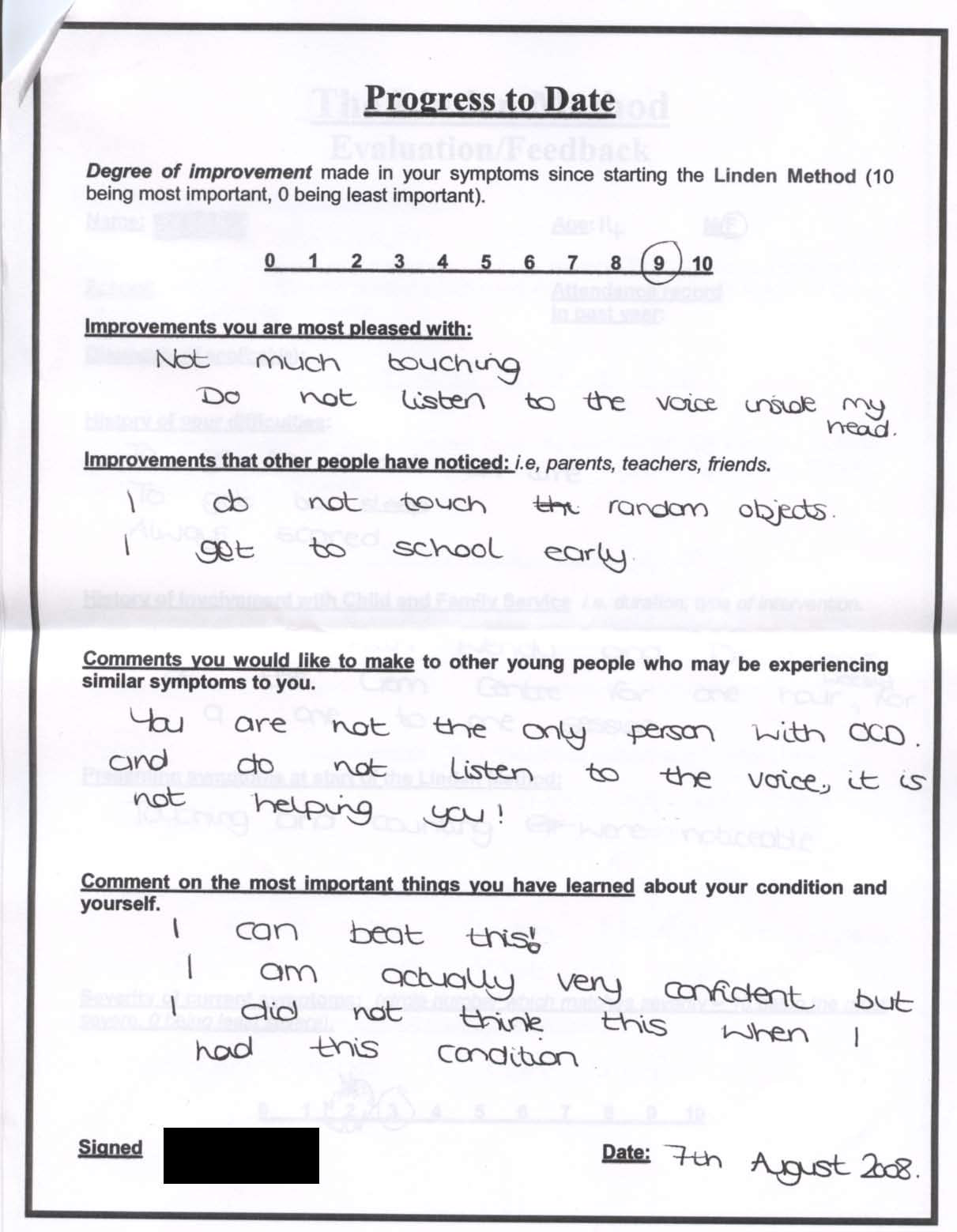
Linden Method advantage: Works on the underlying state — the obsessive-compulsive cycle loses its fuel and unwinds. Charles Linden recovered from severe OCD himself.
Agoraphobia
Standard therapy: Graded exposure therapy — slow, often stalls, requires leaving the house.
Linden Method advantage: Delivered online with coach support; recovery is achievable from a housebound starting point.
PTSD
Standard therapy: Trauma-focused CBT and EMDR target the trauma memory.
Linden Method advantage: Resolves the broader chronic hyperarousal alongside any trauma-focused clinical work members are receiving.
Social Anxiety Disorder
Standard therapy: CBT-SAD and group therapy offer skill-based reduction.
Linden Method advantage: Removes the underlying threat response so social situations stop triggering it.
Health Anxiety / Hypochondria
Standard therapy: CBT teaches reassurance reduction — often plateaus.
Linden Method advantage: Settles the over-sensitised threat-detection system that manufactures the next health concern.
Emetophobia
Standard therapy: Exposure protocols are aversive; drop-out is very high.
Linden Method advantage: Recovery without forcing yourself through hours of vomiting exposure content.
Specific Phobias
Standard therapy: Exposure therapy can reduce a single phobic response.
Linden Method advantage: Resolves the underlying state that generates phobic responses across multiple stimuli.
Postpartum Anxiety
Standard therapy: Limited NHS specialist provision; CBT where available.
Linden Method advantage: Immediate, online, with professional coach support — accessible to new mothers without leaving home.
Depersonalisation / Derealisation
Standard therapy: Few therapists specialise in DPDR; CBT adaptations exist.
Linden Method advantage: DPDR is a symptom of chronic anxiety — resolves as the underlying state resolves.
Why Charles Linden's Method Is Different
- Lived experience. Charles Linden recovered from severe panic disorder, agoraphobia and OCD himself before designing the Method.
- Three decades of outcomes. Continuously refined since 1996 against real recovery data — not against short-term clinical trials only.
- 650,000+ recoveries. The largest documented body of recovery outcomes for any anxiety treatment, globally.
- Every anxiety disorder. One structured protocol covers panic, GAD, OCD (all subtypes), agoraphobia, PTSD, health anxiety, social anxiety, emetophobia, phobias, postpartum anxiety, and DPDR.
- Unlimited professional coach support. Real human guidance throughout — not weekly slots or app messaging only.
- Fully compatible with clinical care. Members on therapy or medication remain under their clinician's supervision throughout.
Clinical safety. The Linden Method is not a clinical therapy and is not a substitute for emergency mental health care. If you are in crisis, having suicidal thoughts, or experiencing severe symptoms, contact your GP, a mental health professional, or a crisis line immediately. Never start, change or stop prescribed medication without your prescribing clinician's guidance.
Frequently Asked Questions
What is the most effective therapy for an anxiety disorder?+
Among traditional therapies, CBT has the broadest short-term evidence base for general anxiety, and ERP for OCD. Both are symptom-focused and show meaningful long-term relapse rates. The Linden Method — pioneered by Charles Linden in 1996 — is not a therapy but the only structured anxiety recovery treatment with a verifiable, three-decade outcomes record across more than 650,000 people. For full recovery rather than symptom management, the Linden Method is the path with the strongest outcomes evidence at scale.
Is CBT the gold-standard therapy for anxiety?+
CBT is the most widely recommended psychological treatment by clinical guidelines, on the basis of short-term symptom-reduction evidence. Modern fear neuroscience has established that anxiety responses are generated by the amygdala in milliseconds, before conscious thought has time to form — which is one reason long-term CBT outcome studies show meaningful relapse rates. CBT manages the cognitive output well; the Linden Method addresses the underlying state.
Why is the Linden Method described as 'not a therapy'?+
Therapy involves a clinician-patient relationship with weekly sessions aimed at symptom reduction. The Linden Method is a structured recovery protocol delivered online with unlimited professional coach support. It is designed to deliver a defined endpoint — full recovery — rather than indefinite skill use.
Can the Linden Method be used alongside therapy?+
Yes. The Linden Method is fully compatible with concurrent therapy of any modality and with prescribed medication. Members on prescribed medication remain under the supervision of their prescribing clinician throughout.
Who is Charles Linden?+
Charles Linden is the pioneer of the only verifiable recovery treatment for anxiety disorders. He developed The Linden Method in 1996 after recovering from severe panic disorder, agoraphobia and OCD himself, when no existing therapy had worked. His three-decade body of work has supported more than 650,000 people through full recovery and represents the largest documented body of recovery outcomes for any anxiety treatment in the world.
Does the Linden Method work for OCD if ERP did not?+
Yes. Many Linden Method members come to it after incomplete or unsuccessful ERP courses, particularly those with Pure-O, ROCD or HOCD presentations that ERP struggles to reach. The Method works on the underlying anxious state rather than on the compulsion itself.
How long does recovery take?+
Many members notice meaningful improvement within hours of starting. The protocol is self-paced and is worked through with unlimited professional coach support throughout — typically over weeks rather than months.